To Become Saints, Conform Our Wills To God’s Will
Written by AJ Baalman on May 23, 2026
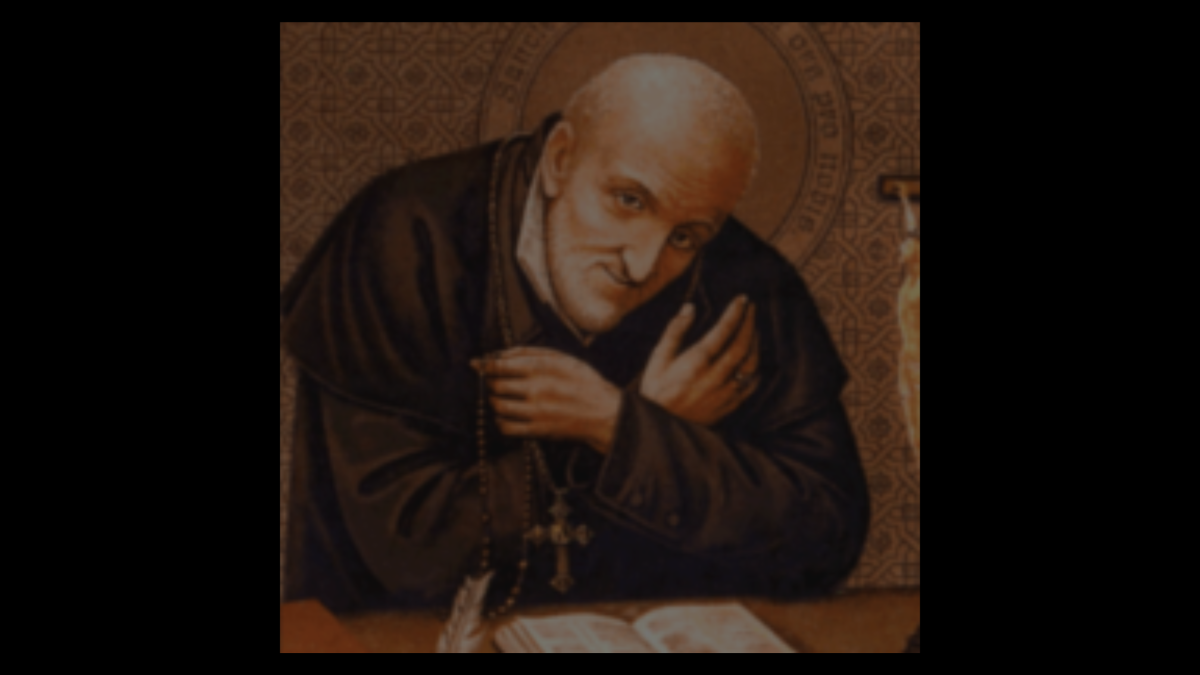
The Sermon Comes From This Book, Click Image To Get A Copy
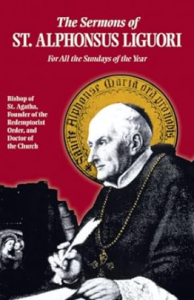
Read First Sunday After Easter’s Sermon
Read Second Sunday After Easter’s Sermon
Read Third Sunday After Easter’s Sermon
Read Fourth Sunday After Easter’s Sermon
Read Fifth Sunday After Easter’s Sermon
Read Ascension Sunday’s Sermon
THE SERMON FOR PENTECOST
“As the Father hath given me commandment, so do I.” JOHN xiv. 31.
+
JESUS CHRIST was given to us, by God, as a saviour and as a master. Hence he came on
earth principally to teach us, not only by his words but also by his own example, how we are
to love God our supreme good: hence, as we read in this days Gospel, he said to his disciples:
“That the world may know that I love the Father, and as the Father hath given me
commandment, so do I.” To show the world the love I bear to the Father, I will execute all his
commands. In another place he said: ”I came down from heaven not to do my own will, but
the will of him that sent me.” (John vi. 38.) Devout souls, if you love God and desire to
become saints, you must seek his will, and wish what he wishes. St. Paul tells us, that the
divine love is poured into our souls by means of the Holy Ghost. “The charity of God is
poured into our hearts by the Holy Ghost, who is given to us.” (Hom. v. 5.) If, then, we wish
for the gift of divine love, we must constantly beseech the Holy Ghost to make us know and
do the will of God. Let us continually implore his light to know, and his strength to fulfil the
divine will. Many wish to love God, but they, at the same time, wish to follow their own, and
not his will. Hence I shall show today, in the first point, that uur sanctification consists
entirely in conformity to the will of God; and in the second, I shall show how, and in what,
we should in practice conform ourselves to the divine will.
+
First Point Our sanctification consists entirely in conformity to the will of God.
+
1. It is certain that our salvation consists in loving God. A soul that does not love God is not
living, but dead. “He that loveth not, abideth in death.” (1 John iii. 14.) The perfection of love
consists in conforming our will to the will of God. “And life in his good will.” (Ps. xxix.
6.)”Have charity, which is the bond of perfection.” (Col. iii. 14.) According to the Areopagite,
the principal effect of love is to unite the wills of lovers, so that they may have but one heart
and one will. Hence all our works, communions, prayers, penances, and alms, please God in
proportion to their conformity to the divine will; and if they be contrary to the will of God,
they are no longer acts of virtue, but defects deserving chastisement.
+
2. Whilst preaching one day, Jesus Christ was told that his mother and brethren were waiting
for him; in answer he said: “Whosoever shall do the will of my Father that is in heaven, he is
my brother and sister and mother.” (Matt. xii. 50.) By these words he gave us to understand
that he acknowledged as friends and relatives those only who fulfil the will of his Father.
+
3. The saints in heaven love God perfectly. In what, I ask, does the perfection of their love
consist? It consists in an entire conformity to the divine will. Hence Jesus Christ has taught us
to pray for grace to do the will of God on earth, as the saints do it in heaven. ”Thy will be
done on earth, as it is in heaven.” (Matt. vi. 10.) Hence St. Teresa says, that”they who practise
prayer, should seek in all things to conform their will to the will of God.” In this, she adds,
consists the highest perfection. He that practises it in the most perfect manner, shall receive
from God the greatest gifts, and shall make the greatest progress in interior life. The
accomplishment of the divine will has been the sole end of the saints in the practice of all
virtues. Blessed Henry Suson used to say: “I would rather be the vilest man on earth with the
will of God, than be a seraph with my own will.”
+
4. A perfect act of conformity is sufficient to make a person a saint. Behold, Jesus Christ
appeared to St. Paul while he was persecuting the Church, and converted him. What did the
saint do? He did nothing more than offer to God his will, that he might dispose of it as he
pleased. “Lord,” he exclaimed, “what wilt thou have me to do? (Acts ix. 6.) And instantly
the Lord declared to Ananias, that Saul was a vessel of election, and apostle of the Gentiles.
“This man is a vessel of election to carry my name before the Gentiles.” (Acts ix. 15.) He that
gives his will to God, gives him all he has.
He that mortifies himself by fasts and penitential austerities,
or that gives alms to the poor for God’s sake, gives to God a part of himself and of
his goods; but he that gives his will to God, gives him all, and can say: Lord, having given
thee my will, I have nothing more to give thee I have given thee all. It is our heart that is, our
will that God asks of us. “My son, give me thy heart.” (Prov. xxiii. 26.) Since, then, says the
holy Abbot Nilus, our will is so acceptable to God, we ought, in our prayers, to ask of him the
grace, not that we may do what he will, but that we may do all that he wishes us to do. Every
one knows this truth, that our sanctification consists in doing the will of God; but there is
some difficulty in reducing it to practice. Let us, then, come to the second point, in which I
have to say many things of great practical utility.
+
Second Point How, and in what, we ought to practise conformity to the will of God.
+
5. That we may feel a facility of doing on all occasions the divine will, we must beforehand
offer ourselves continually to embrace in peace whatever God ordains or wills. Such was the
practice of holy David. “My heart,” he used to say, ”is ready; God! my heart is ready.” (Ps.
cvii. 2.) And he continually besought the Lord to teach him to do his divine will. ”Teach me
to do thy will.” (Ps. cxlii. 1 0.) He thus deserved to be called a man according to God’s own
heart. ”I have found David, the son of Jesse, a man according to my own heart, who shall do
all my wills.” (Acts xiii. 2 2.) And why? Because the holy king was always ready to do
whatever God wished him to do.
+
6. St. Teresa offered herself to God fifty times in the day, that he might dispose of her as he
pleased, and declared her readiness to emhrace either prosperity or adversity. The perfection
of our oblation consists in our offering ourselves to God without reserve. All are prepared to
unite themselves to the divine will in prosperity; but perfection consists in conforming to it,
even in adversity. To thank God in all things that are agreeable to us, is acceptable to him; but
to accept with cheerfulness what is repugnant to our inclinations, is still more pleasing to
him. Father M. Avila used to say, that “a single blessed be God, in adversity, is better than
six thousand thanksgivings in prosperity.”
+
7. We should conform to the divine will, not only in misfortunes which come directly from
God such as sickness, loss of property, privation of friends and relatives but also in crosses
which come to us from men, but indirectly from God such as acts of injustice, defamations,
calumnies, injuries, and all other sorts of persecutions. But, you may ask, does God will that
others commit sin, by injuring us in our property or in our reputation? No; God wills not
their sin; but he wishes us to bear with such a loss and with such a humiliation; and he
wishes us to conform, on all such occasions, to his divine will.
+
8. “Good things and evil… are from God.” (Eccl. xi. 14.) All blessings such as riches and
honours and all misfortunes such as sickness and persecutions come from God. But mark
that the Scripture calls them evils, only because we, through the want of conformity to the
will of God, regard them as evils and misfortunes. But, in reality, if we accepted them from
the hands of God with Christian resignation, they should be blessings and not evils. The
jewels which give the greatest splendour to the crown of the saints in heaven, are the
tribulations which they bore with patience, as coming from the hands of the Lord. On
hearing that the Sabeans had taken away all his oxen and asses, holy Job said: “The Lord
gave, and the Lord hath taken away.” (Job i. 21.)
He did not say that the Lord gave, and that the Sabeans had taken away;
but that the Lord gave, and that the Lord had taken away: and therefore he blessed the Lord,
believing that all had happened through the divine will. “As it has pleased the Lord, so it is done:
blessed be the name of the Lord.” (Ibid.) Being tormented
with iron hooks and burning torches, the holy martyrs Epictetus and Atone said: ”Lord, thy
will be done in us.” And their last words were: ”Be blessed, eternal God, for having given us
the grace to accomplish thy will.”
+
9. ”Whatsoever shall befall the just man, it shall not make him sad.” (Prov. xii. 21.) A soul
that loves God is not disturbed by any misfortune that may happen to her. Cesarius relates
(lib. x., c. vi.), that a certain monk who did not perform greater austerities than his
companions, wrought many miracles. Being astonished at this, the abbot asked him one day
what were the works of piety which he practised. He answered, that he was more imperfect
than the other monks; but that his sole concern was to conform himself to the divine will.
Were you displeased, said the abbot, with the person who injured us so grievously a few
days ago? No, father, replied the monk; I, on the contrary, thanked God for it; because I
know that he does or permits all things for our good. From this answer the abbot perceived
the sanctity of the good religious. We should act in a similar manner under all the crosses
that come upon us. Let us always say: ”Yea, Father; for so hath it seemed good in thy sight.”
(Matt. xi. 26.) Lord, this is pleasing to thee, let it be done.
+
10. He that acts in this manner enjoys that peace which the angels announced at the birth of
Jesus Christ to men of good will that is, to those whose wills are united to the will of God.
These, as the Apostle says, enjoy that peace which exceeds all sensual delights. “The peace of
God, which surpasseth all understanding.” (Phil. iv. 7.) A great and solid peace, which is not
liable to change. “A holy man continueth in wisdom like the sun; but a fool is changing like
the moon.” (Eccl. xxvii 12.) Fools that is, sinners are changed like the moon, which increases
today, and grows less on tomorrow; Today they are seen to laugh through folly,
and tomorrow, to weep through despair; Today they are humhle and meek, tomorrow, proud and
furious. In a word, sinners change with prosperity and adversity; but the just are like the sun,
always the same, always serene in whatever happens to them. In the inferior part of the soul
they cannot but feel some pain at the misfortunes which befall them; but, as long as the will
remains united to the will of God, nothing can deprive them of that spiritual joy which is not
subject to the vicissitudes of this life. “Your joy no man shall take from you.” (John xvi. 22.)
+
11. He that reposes in the divine will, is like a man placed above the clouds: he sees the
lightning, and hears the claps of thunder, and the raging of the tempest below, but he is not
injured or disturbed by them. And how can he be ever disturbed, when whatever he desires
always happens? He that desires only what pleases God, always obtains whatsoever he
wishes, because all that happens to him, happens through the will of God. Salvian says, that
Christians who are resigned, if they be in a low condition of life, wish to be in that state; if
they be poor, they desire poverty; because they wish whatever God wills, and therefore they
are always content. ”Humiles sunt, hoc volunt, pauperes sunt, paupertate delectantur: itaque
beati dicendisunt.” If cold, or heat, or rain, or wind come on, he that is united to the will of
God says: I wish for this cold, this heat, this rain, and this wind, because God wills them. If
loss of property, persecution, sickness, or even death come upon him, he says: I wish for this
loss, this persecution, this sickness; I even wish for death, when it comes, because God wills
it. And how can a person who seeks to please God, enjoy greater happiness than that which
arises from cheerfully embracing the cross which God sends him, and from the conviction
that, in embracing it, he pleases God in the highest degree? So great was the joy which St.
Mary Magdalene de Pazzi used to feel at the bare mention of the will of God, that she would
fall into an ecstacy.
+
12. But, how great is the folly of those who resist the divine will, and, instead of receiving
tribulations with patience, get into a rage, and accuse God of treating them with injustice and
cruelty! Perhaps they expect that, in consequence of their opposition, what God wills shall
not happen? “Who resisteth his will ?” (Rom. ix. 19.) Miserable men! instead of lightening
the cross which God sends them, they make it more heavy and painful. “Who hath resisted
him, and hath peace ?” (Job ix. 4.) Let us be resigned to the divine will, and we shall thus
render our crosses light, and shall gain great treasures of merits for eternal life. In sending us
tribulations, God intends to make us saints. “This is the will of God, your sanctification.” (1
Thess. iv. 3.) He sends us crosses, not because he wishes evil to us, but because he desires our
welfare, and because he knows that they are conducive to our salvation. “All things work
together unto good.” (Rom. viii. 28.) Even the chastisements which come from the Lord are
not for our destruction, but for our good and for the correction of our faults. ”Let us believe
that these scourges of the Lord….have happened for our amendment, and not for our
destruction.” (Jud. viii. 27.) God loves us so tenderly, that he not only desires, but is solicitous
about our welfare. ”The Lord,” says David, ”is careful for me.” (Ps. xxxix. 18.)
+
13. Let us, then, always throw ourselves into the hands of God, who so ardently desires and
so anxiously watches over our eternal salvation. ”Casting all your care upon him; for he hath
care of you.” (1 Peter v. 7.) He who, during life, casts himself into the hands of God, shall lead
a happy life and shall die a holy death. He who dies resigned to the divine will, dies a saint;
but they who shall not have been united to the divine will during life, shall not conform to it
at death, and shall not be saved. The accomplishment of the divine will should be the sole
object of all our thoughts during the remainder of our days. To this end we should direct all
our devotions, our meditations, communions, visits to the blessed sacrament, and all our
prayers. We should constantly beg of God to teach and help us to do his will. “Teach me to
do thy will.” (Ps. cxlii. 10.) Let us, at the same time, offer ourselves to accept without reserve
whatever he ordains, saying, with the Apostle: ”Lord, what wilt thou have me to do ?” (Acts
ix. 6.) Lord, tell me what thou dost wish me to do I desire to do thy will. And in all things,
whether they be pleasing or painful, let us always have in our mouths that petition of the
PATER NOSTER-”Thy will be done”Let us frequently repeat it in the day, with all the
affection of our hearts. Happy we, if we live and die saying: ”Thy will be done” “Thy will be
done!”
+
Closing Advertisement! Help 88 Christian Families In Lebanon By Clicking The Image

Click Image To Get A Calendar

Views: 65