First Sunday After Easter Sermon: ON AVOIDING THE OCCASIONS OF SIN.
Written by AJ Baalman on April 12, 2026
The Sermon Comes From This Book, Click Image To Get A Copy
“When the doors were shut, where His disciples were gathered together for fear of the Jews,
Jesus came and stood in the midst.” JOHN xx. 19.
+
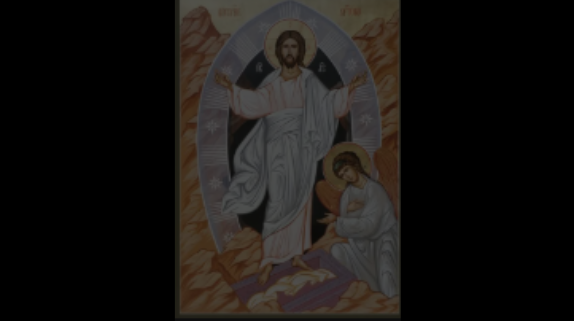
WE find in this day’s gospel that after his resurrection Jesus Christ entered, though the doors
were closed, into the house in which the apostles were assembled, and stood in the midst of
them. St. Thomas says, that the mystic meaning of this miracle is, that the Lord does not enter
into our souls unless we keep the door of the senses shut. “Mistice per hoc datur intelligi,
quod Christus nobit apparet quando fores, id est sensus sunt clausi.” If, then, we wish Jesus
Christ to dwell within us, we must keep the doors of our senses closed against dangerous
occasions, otherwise the devil will make us his slaves. I will show Today the great danger of
perdition to which they who do not avoid the occasions of sin expose themselves.
+
1. We read in the Scriptures that Christ and Lazarus arose from the dead. Christ rose to die
no more “Christ rising from the dead, dieth no more”(Rom. vi. 9); but Lazarus arose and died
again. The Abbot Guerric remarks that Christ arose free and unbound; “but Lazarus came
forth bound feet and hands.” (John xi. 44.) Miserable the man, adds this author, who rises
from sin bound by any dangerous occasion: he will die again by losing the divine grace. He,
then, who wishes to save his soul, must not only abandon sin, but also the occasions of sin:
that is, he must renounce such an intimacy, such a house; he must renounce those wicked
companions, and all similar occasions that incite him to sin.
+
2. In consequence of original sin, we all have an inclination to do what is forbidden. Hence St.
Paul complained that he experienced in himself a law opposed to reason: “But I see another
law in my members, fighting against the law of my mind, and captivating me in the law of
sin.” (Rom. vii. 23.) Now, when a dangerous occasion is present, it violently excites our
corrupt desires, so that it is then very difficult to resist them: because God withholds
efficacious helps from those who voluntarily expose themselves to the occasion of sin. “He
that loveth danger shall perish in it.” (Eccl. iii. 27.)”When,” says St. Thomas, in his comment
on this passage, “we expose ourselves to danger, God abandons us in it.”
St. Bernardine of Sienna teaches that the counsel of avoiding the occasions of sin is the best of all counsel,
and as it were the foundation of religion.
“Inter consilia Christi unum celeberrimum, et quasi
religiouis fundamentum est, fugere peccatorum occasiones.”
+
3. St. Peter says that”the devil goeth about seeking whom he may devour.” (1 Pet. v. 8.) He is
constantly going about our souls, endeavouring to enter and take possession of them. Hence,
he seeks to place before us the occasions of sin, by which he enters the soul. ”Explorat,” says
St. Cyprian, ”an sit pars cujus aditu penetret.” When the soul yields to the suggestions of the
devil, and exposes herself to the occasions of sin, he easily enters and devours her. The ruin
of our first parents arose from their not flying from the occasions of sin. God had prohibited
them not only to eat, but even to touch the forbidden apple. In answer to the serpent
tempting her, Eve said: “God hath commanded us that we should not eat, and that we
should not touch it.” (Gen. iii. 3.) But”she saw, took, and eat”the forbidden fruit: she first
looked at it, she then took it into her hands, and afterwards eat it. This is what ordinarily
happens to all who expose themselves to the occasions of sin. Hence, being once compelled
by exorcisms to tell the sermon which displeased him most, the devil confessed that it was
the sermon on avoiding the occasions of sin. As long as we expose ourselves to the occasions
of sin, the devil laughs at all our good purposes and promises made to God. The greatest care
of the enemy is to induce us not to avoid evil occasions; for these occasions, like a veil placed
before the eyes, prevent us from seeing either the lights received from God, or the eternal
truths, or the resolutions we have made: in a word, they make us forget all, and as it were
force us into sin.
+
4. ”Know it to be a communication with death; for thou art going in the midst of snares.”
(Eccl. ix. 20.) Everyone born in this world enters into the midst of snares. Hence, the Wise
Man advises those who wish to be secure to guard themselves against the snares of the
world, and to withdraw from them. “He that is aware of the snares shall be secure.” (Prov.
xi. 15.) But if, instead of withdrawing from them, a Christian approaches to them, how can he
avoid being caught by them? Hence, after having with so much loss learned the danger of
exposing himself to the danger of sin, David said that, to continue faithful to God, he kept at
a distance from every occasion which could lead him to relapse. “I have restrained my feet
from every evil way, that I may keep thy words.” (Ps. cxviii. 101.) He does not say from every
sin, but from every evil way which conducts to sin. The devil is careful to find pretexts to
make us believe that certain occasions to which we expose ourselves are not voluntary, but
necessary. When the occasion in which we are placed is really necessary, the Lord always
helps us to avoid sin; but we sometimes imagine certain necessities which are not sufficient to
excuse us. “A treasure is never safe” says St. Cyprian, “as long as a robber is harboured
within; nor is a lamb secure while it dwells in the same den with a wolf.” (Lib. de Sing. Cler.)
The saint speaks against those who do not wish to remove the occasions of sin, and still say:
“I am not afraid that I shall fall.” As no one can be secure of his treasure if he keeps a thief in
his house, and as a lamb cannot be sure of its life if it remain in the den of a wolf, so likewise
no one can be secure of the treasure of divine grace if he is resolved to continue in the
occasion of sin. St. James teaches that every man has within himself a powerful enemy, that
is, his own evil inclinations, which tempt him to sin. ”Every man is tempted by his own
concupiscence, drawn away, and allured.” (St. James i. 14.)
+
If, then, we do not fly from the external occasions, how can we resist temptation and avoid
sin? Let us, therefore, place before our eyes the general remedy which Jesus has prescribed
for conquering temptations and saving our souls. ”If thy right eye scandalize thee, pluck it
out and cast it from thee.” (Matt. v. 29.) If you find that your right eye is to you a cause of
damnation, you must pull it out and cast it far from you; that is, when there is danger of
losing your soul, you must fly from all evil occasions. St. Francis of Assisium used to say, as I
have stated in another sermon, that the devil does not seek, in the beginning, to bind
timorous souls with the chain of mortal sin; because they would be alarmed at the thought
of committing mortal sin, and would fly from it with horror: he endeavours to bind them by
a single hair, which does not excite much fear; because by this means he will succeed more
easily in strengthening their bonds, till he makes them his slaves. Hence he who wishes to be
free from the danger of being the slave of hell must break all the hairs by which the enemy
attempts to bind him; that is, he must avoid all occasions of sin, such as certain salutations,
billets, little presents, and words of affection. With regard to those who have had a habit of
impurity, it will not be sufficient to avoid proximate occasions; if they do not fly from remote
occasions, they will very easily relapse into their former sins.
+
5. Impurity, says St. Augustine, is a vice which makes war on all, and which few conquer.
“The fight is common, but the victory rare.” How many miserable souls have entered the
contest with this vice, and have been defeated! But to induce you to expose yourselves to
occasions of this sin, the devil will tell you not to be afraid of being overcome by the
temptation. “I do not wish,” says St. Jerome, “to fight with the hope of victory, lest I should
sometimes lose the victory.” I will not expose myself to the combat with the hope of
conquering; because, by voluntarily engaging in the fight, I shall lose my soul and my God.
To escape defeat in this struggle, a great grace of God is necessary; and to render ourselves
worthy of this grace, we must, on our part, avoid the occasions of sin. To practise the virtue
of chastity, it is necessary to recommend ourselves continually to God: we have not strength
to preserve it; that strength must be the gift of God. “And as I knew,” says the Wise Man,
”that I could not otherwise be continent, except God gave it, … I went to the Lord, and
besought him.” (Wis. viii. 21.) But if we expose ourselves to the occasions of sin, we ourselves
shall provide our rebellious flesh with arms to make war against the soul. “Neither,” says the
Apostle, “yield ye your members as instruments of sin unto iniquity.” (Rom. vi. 13.) In
explaining this passage, St. Cyril of Alexandria says: “You stimulate the flesh; you arm it,
and make it powerful against the spirit.” St. Philip Neri used to say, that in the war against
the vice of impurity, the victory is gained by cowards that is, by those who fly from the
occasions of this sin. But the man who exposes himself to it, arms his flesh, and renders it so
powerful, that it will be morally impossible for him to resist its attacks.
+
6. “Cry,” says the Lord to Isaias, “all flesh is grass.” (Isa. xl. 6.) Now, says St. John
Chrysostom, if all flesh is grass, it is as foolish for a man who exposes himself to the occasion
of sin to hope to preserve the virtue of purity, as to expect that hay, into which a torch has
been thrown, will not take fire. ”Put a torch into hay, and then dare to deny that the hay will
burn.” No, says St. Cyprian; it is impossible to stand in the midst of flames, and not to burn.
”Impossibile est flammis circumdari et non ardere.” (De Sing. Cler.)”Can a man,” says the
Holy Ghost, “hide fire in his bosom, and his garments not burn? or can he walk upon hot
coals, and his feet not be burnt ?” (Prov. vi. 27, 28.) Not to be burnt in such circumstances
would be a miracle.
St. Bernard teaches, that to preserve chastity, and, at the same time,
to expose oneself to the proximate occasion of sin, ”is a greater miracle than to raise a dead man
to life.”
+
7. In explaining the fifth Psalm, St. Augustine says, that “he who is unwilling to fly from
danger, wishes to perish in it.” Hence, in another place, he exhorts those who wish to
conquer, and not to perish, to avoid dangerous occasions. ”In the occasion of falling into sin,
take flight, if you desire to gain the victory.” (Serm. ecl. de temp.) Some foolishly trust in
their own strength, and do not see that their strength is like that of tow placed in the fire.
”And your strength shall be as the ashes of tow.” (Isa. i. 31 .) Others, trusting in the change
which has taken place in their life, in their confessions, and in the promises they have made
to God, say: Through the grace of the Lord, I have now no bad motive in seeking the
company of such a person; her presence is not even an occasion of temptations: Listen, all
you who speak in this manner. In Mauritania there are bears that go in quest of the apes, to
feed upon them: as soon as a bear appears, the apes run up the trees, and thus save
themselves. But what does the bear do? He stretches himself on the ground as if dead, and
waits till the apes descend from the trees. The moment he sees that they have descended, he
springs up, seizes on them, and devours them. It is thus the devil acts: he makes the
temptation appear to be dead; but when a soul descends, and exposes herself to the occasion
of sin, he stirs up temptation, and devours her. Oh! how many miserable souls, devoted to
spiritual things, to mental prayer, to frequent communion, and to a life of holiness, have, by
exposing themselves to the occasion of sin, become the slaves of the devil! We find in
ecclesiastical history that a holy woman, who employed herself in the pious office of burying
the martyrs, once found among them one who was not as yet dead. She brought him into her
own house, and procured a physician and medicine for him, till he recovered. But, what
happened? These two saints (as they might be called one of them on the point of being a
martyr, the other devoting her time to works of mercy with so much risk of being persecuted
by the tyrants) first fell into sin and lost the grace of God, and, becoming weaker by sin,
afterwards denied the faith. St. Macarius relates a similar fact regarding an old man who
suffered to be half-burned in defence of the faith; but, being brought back into prison, he,
unfortunately for himself, formed an intimacy with a devout woman who served the
martyrs, and fell into sin.
+
8. The Holy Ghost tells us, that we must fly from sin as from a serpent. “Flee from sin as
from, the face of a serpent.” (Eccl. xxi. 2.) Hence, as we not only avoid the bite of a serpent,
but are careful neither to touch nor approach it, so we must fly not only from sin, but also
from the occasion of sin that is, from the house, the conversation, the person that would lead
us to sin. St. Isidore says, that he who wishes to remain near a serpent, will not remain long
unhurt. “Juxta serpentem positus non erit din illæsus.” (Lib. 2, Solit.) Hence, if any person is
likely to prove an occasion of your ruin, the admonition of the Wise Man is, “Remove thy
way far from her, and come not nigh the doors of her house.” (Prov. v. 8.) He not only tells
you not to enter the house which has been to you a road to hell. “Her house is the way to
hell.” Prov. vii. 27); but he also cautions you not to approach it, and even to keep at a distance
from it. ”Remove thy way far from her.” But, you will say, if I abandon that house, my
temporal affairs shall suffer. It is better that you should suffer a temporal loss, than that you
should lose your soul and your God. You must be persuaded that, in whatever regards
chastity, there cannot be too great caution.
+
If we wish to save our souls from sin and hell, we must always fear and tremble. ”With fear
and trembling work out your salvation. ” (Phil. ii. 12.) He who is not fearful, but exposes
himself to occasions of sin, shall scarcely be saved. Hence, in our prayers we ought to say
every day, and several times in the day, that petition of the OUR FATHER”and lead us not
into temptation.” Lord, do not permit me to be attacked by those temptations which would
deprive me of your grace. We cannot merit the grace of perseverance; but, according to St.
Augustine, God grants it to every one that asks it, because he has promised to hear all who
pray to him. Hence, the holy doctor says, that the Lord, “by his promises has made himself a
debtor.”
+
Please Consider Scanning The QR Code To Help The Christians Of Lebanon

Please Click The Image Below To Help The Christians Of Lebanon

Views: 28