On The Vanity Of The World & How Dangerous It Is For Our Souls
Written by AJ Baalman on July 19, 2026
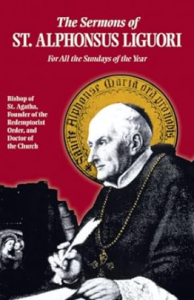
The Sermon Comes From This Book, Click Image To Get A Copy
“And have nothing to eat.” MARK viii. 2.
+
1. SUCH were the attractions of our Divine Saviour, and such the sweetness with which he
received all, that he drew after him thousands of the people. Ho one day saw himself
surrounded by a great multitude of men, who followed him and remained with him three
days, without eating anything. Touched with pity for them, Jesus Christ said to his disciples:
”I have compassion on the multitude; for behold they have now been with me three days, and
have nothing to eat.” (Mark viii. 2.) He, on this occasion, wrought the miracle of the
multiplication of the seven loaves and a few fishes, so as to satisfy the whole multitude. This
is the literal sense; but the mystic sense is, that in this world there is no food which can fill the
desire of our souls. All the goods of this earth riches, honours, and pleasures delight the
sense of the body, but cannot satiate the soul, which has been created” for God, and which
God alone can content. ” I will, therefore speak Today on the vanity of the world, and will
show how great is the illusion of the lovers of the world, who lead an unhappy life on this
earth, and expose themselves to the imminent danger of a still more unhappy life in eternity.
+
2. “O ye sons of men,” exclaims the Royal Prophet, against worldlings, ”how long will you be
dull at heart? Why do you love vanity and seek after lying ?” (Ps. iv. 3.) O men, fools, how
long will you fix the affections of your hearts on this earth? why do you love the goods of this
world, which are all vanity and lies? Do you imagine that you shall find peace by the
acquisition of these goods? But how can you expect to find peace, while you walk in the ways
of affliction, and misery? Behold how David describes the condition of worldlings.
”Destruction and unhappiness in their ways; and the way of peace they have not known.”
(Ps. xiii. 3.) You hope to obtain peace from the world; but how can the world give you that
peace which you seek, when St. John says, ”that the whole world is seated in wickedness ?”
(1 John v. 19.) The world is full of iniquities; hence worldlings live under the despotism of the
wicked one that is, the Devil. The Lord has declared that there is no peace for the wicked who
live without his grace. ”There is no peace to the wicked.” (Isa. xlviii. 22.)
+
3. The goods of the world are but apparent goods, which cannot satisfy the heart of man.
“You have eaten,” says the Prophet Aggeus, ”and have not had enough.” (Ag. i. 6) Instead of
satisfying our hunger they increase it. ”These,” says St. Bernard, “provoke rather than
extinguish hunger.” If the goods of this work! made men content, the rich and powerful
should enjoy complete happiness; but experience shows the contrary. We see every day that
they are the most unhappy of men; they appear always oppressed by fears, by jealousies and
sadness. Listen to King Solomon, who abounded in these goods: ”And behold all is vanity
and vexation of spirit.” (Eccl. i. 14.) He tells us, that all things in this world are vanity, lies,
and illusion. They are not only vanity, but also affliction of spirit. They torture the poor soul,
which finds in them a continual source, not of happiness, but of affliction and bitterness. This
is a just punishment on those who instead of serving their God with joy, wish to serve their
enemy the world which makes them endure the want of every good. ”Because thou didst not
serve the Lord thy God with joy and gladness of heart thou shaft serve thy enemy in hunger,
and thirst, and nakedness, and in want of all things. ”(Deut. xxviii. 47, 48.) Man expects to
content his heart with the goods of this earth; but, howsoever abundantly he may possess
them, he is never satisfied. Hence, he always seeks after more of them, and is always
unhappy. Oh! happy he who wishes for nothing but God; for God will satisfy all the desires
of his heart. “Delight in the Lord, and he will give thee the requests of thy heart.” (Ps. xxxvi.
4.) Hence St. Augustine asks: “What, miserable man, dost thou seek in seeking after goods?
Seek one good, in which are all goods.” And, having dearly learned that the goods of this
world do not content, but rather afflict the heart of man, the saint, turning to the Lord, said:
“All things are hard, and thou alone repose.” Hence in saying, “My God and my all,” the
seraphic St. Francis, though divested of all worldly goods, enjoyed greater riches and
happiness than an the worldlings on this earth. Yes; for the peace which fills the soul that
desires nothing but God, surpasses all the delights which creatures can give. They can only
delight the senses, but cannot content the heart of man. “The peace of God which surpasseth
all understanding.” (Phil. iv. 7.) According to St. Thomas, the difference between God, the
sovereign good, and the goods of the earth, consists in this, that he more perfectly we possess
God, the more ardently we love him, because the more perfectly we possess him, the better
we comprehend his infinite greatness, and therefore the more we despise other things; but,
when we possess temporal goods, we despise them, because we see their emptiness, and
desire other things, which may make us content. “Summum bonum quanto perfectius
possidetur, tanto magis amatur, et alia contemnuntur. Sed in appetitu temporalium
bonorum, quando habentur, contemnentur, et alia appetuntur.” (S. Thom, i. 2, qu. 2, art. 1, ad.
3.)
+
4. The Prophet Osee tells us that the world holds in its hand a deceitful balance. ”He is like
Chanaan” (that is the world); “there is a deceitful balance in his hand.” (Osee xii. 7.) We
must, then, weigh things in the balance of God, and not in that of the world, which makes
them appear different i rom what they are. What are the goods of this life?”My days, ”said
Job, “have been swifter than a post: they have passed by as ships carrying fruits.” (Job ix. 25,
26.) The ships signify the lives of men, which soon pass away, and run speedily to death; and
if men have laboured only to provide themselves with earthly goods, these fruits decay at the
hour of death: we can bring none of them with us to the other world. We, says St. Ambrose,
falsely call these things our property, which we cannot bring witli us to eternity, where we
must live for ever, and where virtue alone will accompany us. “Non nostra sunt, quæ non
possumus auferre nobiscum: sola virtus nos comitatur.” You, says St. Augustine, attend only
to what a rich man possessed; but tell me, which of his possessions shall he, now that he is
on the point of death, be able to take with him?”Quid hie habebat attendis, quid secum fert,
atteudo ?” (Serm. xiii. de Adv. Dom.) The rich bring with them a miserable garment, which
shall rot with them in the grave. And should they, during life, have acquired a great name,
they shall be soon forgotten. ”Their memory hath perished with a noise.” (Ps. ix. 7.)
+
5. Oh! that men would keep before their eyes that great maxim of Jesus Christ”What doth it
profit a man, if he gain the whole world, and suffer the loss of his own soul ?” (Matt. xvi. 26.)
If they did, they should certainly cease to love the world. What shall it profit them at the hour
of death to have acquired all the goods of this world, if their souls must go into hell to be in
torments for all eternity? How many has this maxim, sent into the cloister and into the
desert? How many martyrs has it encouraged to embrace torments and death!
In the history of England, we read of thirty kings and queens,
who left the world and became religious, in order to secure a happy death.
The consideration of the vanity of earthly goods made St. Francis Borgia retire from the world.
At the sight of the Empress Isabella, who had died in
the flower of youth, he came to the resolution of serving God alone. “Is such, then,” he said,
”the end of all the grandeur and crowns of this world? Henceforth I will serve a master who
can never die.” The day of death is called”the day of destruction” (“The day of destruction is
at hand”(Deut. xxxii. 35), because on that day we shall lose and give up all the goods of the
world all its riches, honours, and pleasures. The shade of death obscures all the treasures and
grandeurs of this earth; it obscures even the purple and the crown. Sister Margaret of St.
Anne, a Discalced Carmelite, and daughter of the Emperor Rodolph the Second, used to say:
”What do kingdoms profit us at the hour of death ?” “The affliction of an hour maketh one
forget great delights.” (Eccl. xi. 29.) The melancholy hour of death puts an end to all the
delights and pomps of this life. St. Gregory says, that all goods which cannot remain with us,
or which are incapable of taking away our miseries, are deceitful. ”Fallaces sunt que
nobiscum permanere non possunt: fallaces sunt que mentis nostræ inopiam non expellunt.”
(Hom. xv. in Luc.) Behold a sinner whom the riches and honours which he had acquired
made an object of envy to others. Death came upon him when he was at the summit of his
glory, and he is no longer what he was. “I have seen the wicked highly exalted, and lifted up
like the cedars of Libanus; and I passed by, and lo! he was not; and I sought him, and his
place was not found.” (Ps. xxxvi. 35, 38.)
+
6. These truths the unhappy damned fruitlessly confess in hell, where they exclaim with
tears: “What hath pride profited us? or what advantage hath the boasting of riches brought
us? All those things are passed away like a shadow.” (Wis. v. 8, 9.) What, they say, have our
pomps and riches profited us, now that they are all passed away like a shadow, and for us
nothing remains but eternal torments and despair? Dearly beloved Christians, let us open our
eyes, and now that we have it in our power, let us attend to the salvation of our souls; for, if
we lose them, we shall not be able to save them in the next life. Aristippus, the philosopher,
was once shipwrecked, and lost all his goods; but such was the esteem which the people
entertained for him on account of his learning, that, as soon as he reached the shore, they
presented him with an equivalent for all that he had lost. He then wrote to his friends, and
exhorted them to attend to the acquisition of goods which cannot be lost by shipwreck. Our
relatives and friends who have passed into eternity exhort us, from the other world, to labour
in this life for the attainment of goods which are not lost at death. If at that awful moment we
shall be found to have attended only to the accumulation of earthly goods, we shall be called
fools, and shall receive the reproach addressed to the rich man in the gospel, who, after
having reaped an abundant crop from his fields, said to himself: “Soul, thou hast much goods
laid up for many years; take thy rest, eat, drink, make good cheer. But, God said to him: Thou
fool, this night do they require thy soul of thee: and whose shall those things be which thou
hast provided ?” (Luke xii. 19,20.) He said, ”they require thy soul of thee,” because to
everyman his soul is given, not with full power to dispose of it as he pleases, but it is given to
him in trust, that he may preserve and return it to God in a state of innocence, when it shall
be presented at the tribunal of the Sovereign Judge. The Redeemer concludes this parable by
saying: ”So is he that layeth up treasure for himself, and is not rich towards God” (v. 21).
This is what happens to those who seek to enrich themselves with the goods of this life, and
not with the love of God. Hence St. Augustine asks: ”What has the rich man if he has not
charity? If the poor man has charity, what is there that he has not ?” He that possesses all
the treasures of this world, and has not charity, is the poorest of men; but the poor who have
God possess all things, though they should be bereft of all earthly goods.
+
7. “The children of this world,“ says Jesus Christ, ”are wiser in their generation than the
children of light.” (Luke xvi. 8.) how wise in earthly affairs are worldlings, who live in the
midst of the darkness of the world! “Behold,” says St. Augustine, ”how much men suffer for
things for which they entertain a vicious love.” “What fatigue do they endure for the
acquisition of property, or of a situation of emolument! With what care do they endeavour to
preserve their bodily health! They consult the best physician, and procure the best medicine.
And Christians, who are the children of light, will take no pains, will suffer nothing, to secure
the salvation of their souls! God! at the light of the candle which lights them to death, at that
hour, at that time, which is called the time of truth, worldlings shall see and confess their
folly. Then each of them shall exclaim: that I had led the life of a saint! At the hour of death,
Philip the Second, King of Spain, called in his son, and having shown him his breast
devoured with worms, said to him: Son, behold how we die; behold the end of all worldly
greatness. He then ordered a wooden cross to be fastened to his neck; and, having made
arrangements for his death, he turned again to his son, and said: My son, I wished you to be
present at this scene, that you might understand how the world in the end treats even
monarchs. He died saying: Oh, that I had been a lay brother in some religious order, and that
I had not been a king! Such is the language at the hour of death, even of the princes of the
earth, whom worldlings regard as the most fortunate of men. But these desires and sights of
regret serve only to increase the anguish and remorse of the lovers of the world at the hour of
death, when the scene is about to close.
+
8. And what is the present life but a scene, which soon passes away for ever? It may end
when we least expect it. Cassimir, King of Poland, while he sat at table with his grandees,
died in the act of raising a cup to take a draught; thus the scene ended for him. The Emperor
Celsus was put to death in seven days after his election; and the scene closed for him.
Ladislaus, King of Bohemia, in his eighteenth year, while he was preparing for the reception
of his spouse, the daughter of the King of France, was suddenly seized with a violent pain,
which took away his life. Couriers were instantly despatched to announce to her that the
scene was over for Ladislaus, that she might return to France. “The world,” says Cornelius à
Lapide, in his comment upon this passage, “is like a stage. One generation passes away, and
a new generation comes. The king does not take wiih him the purple. Tell me, villa, O house,
how many masters had you ?” In every age the inhabitants of this earth are changed. Cities
and kingdoms are filled with new people. The first generation passes to the other world, a
second comes on, and this is followed by another. He who, in the scene of this world, has
acted the part of a king is no longer a king. The master of such a villa or palace is no longer its
master. Hence the Apostle gives us the following advice: “The time is short; it remaineth
that… they that use this world be as if they used it not; for the fashion of this world passeth
away.” (I Cor. vii. 29, 30.) Since the time of our dwelling on this earth is short, and since all
must end with our death, let us make use of this world to despise it, as if it did not exist for
us; and let us labour to acquire the eternal treasures of Paradise, where, as the Gospel says,
there are no moths to consume, nor thieves to steal them. ”But lay up to yourselves treasures
in heaven, where neither the rust nor the moth doth consume, and where thieves do not break
through nor steal.” (Matt. vi. 20.) St. Teresa used to say: ”We should not set value on what
ends with life; the true life consists in living in such a manner as not to be afraid of death.”
Death shall have no terror for him who, during life, is detached from the vanities of this
world, and is careful to provide himself only with goods which shall accompany him to
eternity, and make him happy for ever.
+
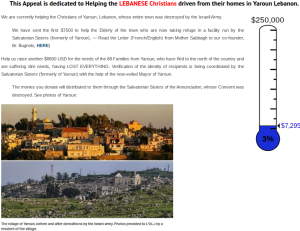
Closing Advertisement! Help 88 Christian Families In Lebanon By Clicking The Image
Click Image To Get A Calendar

Views: 44
Continue reading