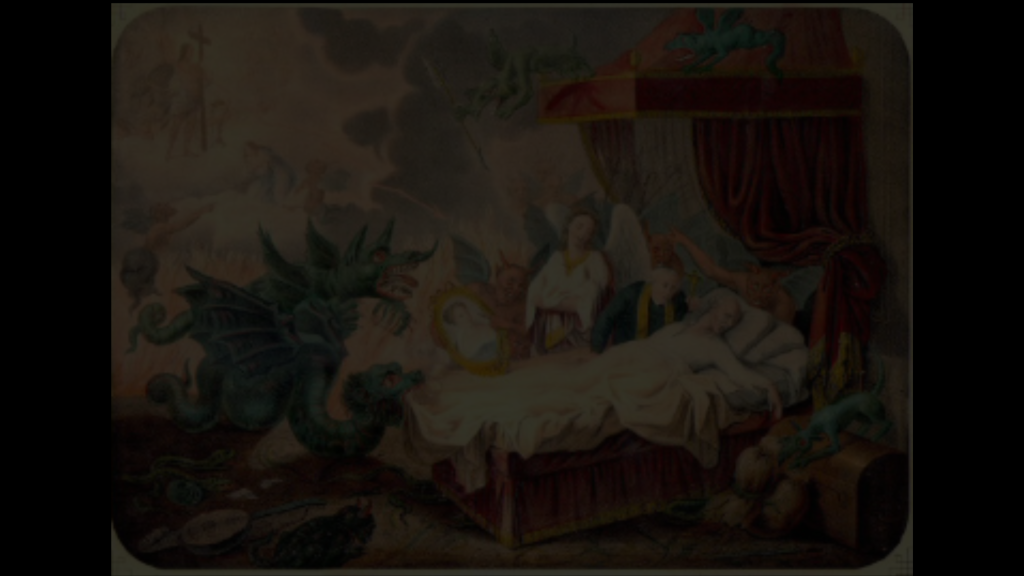
The Necessity For Us To Pray: Learn From St. Alphonsus Liguori On Prayer
Written by AJ Baalman on August 23, 2026
The Sermon Comes From This Book, Click Image To Get A Copy
“God, be merciful to me a sinner.” LUKE xviii. 13.
+
IN this day’s gospel we read, that two men, one a Pharisee and the other a Publican, went to
the temple. Instead of bowing down to beg of God to assist him by his graces, the Pharisee
said: I thank thee, O Lord, that I am not as the rest of men, who are sinners. “Deus gratias
ago tibi, quia non sum sicut cæteri homines.” But the Publican, tilled with sentiments of
humility, cried out: ”O God, be merciful to me, a sinner.” St. Luke tells us, that this Publican
returned to his house justified; and that the Pharisee went home as guilty and as proud as
when he entered the temple. From this, most beloved brethren, you may infer how pleasing
to God, and how necessary for us, are our humble petitions to obtain from the Lord all the
graces which are indispensable for salvation. In this sermon I will show, in the first point, the
efficacy of prayer: and in the second, the necessity of prayer.
+
First Point. On the efficacy of prayer.
+
1. To understand the efficacy and value of our prayers, we need only consider the great
promises which. God has made to every one who prays. “Call upon me, and I will deliver
thee.” (Ps. xlix. 15.) Call upon me, and I will save you from every danger. ”He shall cry to me,
I will hear him.” (Ps. xc. 15.) “Cry to me, and I will hear thee.” (Jer. xxxiii. 3.) “You shall ask
whatever you will, and it shall be done unto you.” (John xv. 7.) Ask whatsoever you wish
and it shall le given to you. There are a thousand similar passages in the Old and New
Testaments. By his nature God is, as St. Leo says, goodness itself. “Deus cujus natura
bonitas.” Hence he desires, with a great desire, to make us partakers of his own good. St.
Mary Magdalene de Pazzi used to say, that when a soul prays to God for any grace, he feels
in a certain manner under an obligation to her, and thanks her; because by prayer the soul
opens to him a way of satisfying his desire to dispense his graces to us. Hence, in the holy
Scriptures, the Lord appears to recommend and inculcate to us nothing more forcibly than to
ask and pray. To show this, the words which we read in the seventh chapter of St. Matthew
are sufficient. ”Ask, and it shall be given you; seek, and you shall find; knock, and it shall be
opened to you” (vii. 7). St. Augustine teaches, that by these promises God has bound himself
to grant all that we ask in prayer. ”By his promises he has made himself a debtor.” (De Verb.
Dom. Serm. ii.) And, in the fifth sermon, the saint says, that if the Lord did not wish to
bestow his graces upon us, he would not exhort us so strenuously to ask them. “He would
not exhort us to ask, unless he wished to give.” Hence we see that the Psalms of David and
the Books of Solomon and of the Prophets are full of prayers.
+
2. Theodoret has written, that prayer is so efficacious before God, that, ”though it be one, it
can do all things.”“Oratio cum sit una, omnia potest.” St. Bernard teaches, that when we
pray, the Lord, if he does not give the grace we ask, will grant a more useful gift. ”He will
give either what we ask, or what he knows to be more profitable to us.” (Serm. v. in Fer. 4
cm.) And whom has God, when asked for aid, ever despised by not listening to his
petition?”Who hath called upon him, and he despised him ?” (Eccl. ii. 12.) The Scripture says,
that among the nations there is none that has gods so willing to hear our prayers, as our true
God. “Neither is there any other nation so great, that hath gods so nigh to them, as our God
is present to all our petitions.” (Deut. iv. 7.) The princes of the earth, says St. Chrysostom,
give audience only to a few; but God grants it to every one that wishes for it. ”Aures
principis paucis patent, Die vero omnibus volentibus.” (Lib. 2, de Orat.) David tells us that
this goodness of God in hearing us at whatever time we pray to him, shows us that he is our
true God, whose love for us surpasses the love of all others. ”In what day soever I shall call
upon thee, behold I know thou art my God.” (Ps. lv. 10.) He wishes and ardently desires to
confer favours upon us; but he requires us to pray for them. Jesus Christ said one day to his
disciples: ”Hitherto you have not asked anything in my name; ask, and you shall receive,
that your joy may be full.” (John xvi. 24.) As if he said: You complain of me for not making
you perfectly content; but you ought to complain of yourselves for not having asked of me all
the gifts you stood in need of; ask, henceforth, whatsoever you want, and your prayer shall
be heard. Many, says St. Bernard complain that the Lord is wanting to them. But he
complains with more justice that they are wanting to him, by neglecting to ask him for his
graces. ”Omnes nobis causamur deesse gratiam, sed justius forsitan ista sibi queritur deesse
nonnullos.” (S. Bern, de Tripl. Cust.)
+
3. The ancient fathers, after having consulted together about the exercise most conducive to
salvation, came to the conclusion, that the best means of securing eternal life is, to pray
continually, saying: Lord, assist me; Lord, hasten to my assistance. ”Incline unto my aid,
God; Lord, make haste to help me.” Hence the holy Church commands these two petitions to
be often repeated in the canonical hours by all the clergy and by all religious, who pray not
only for themselves, but also for the whole Christian world. St. John Climacus says, that our
prayers as it were compel God by a holy violence to hear us. “Prayer piously does violence to
God.” Hence, when we pray to the Lord, He instantly answers by bestowing upon us the
grace we ask. ”At the voice of thy cry, as soon as he shall hear, he will answer thee.” (Isa.
xxx. 19.) Hence St. Ambrose says, that”he who asks of God, receives while he asks.” (Ep.
Ixxxiv., ad Demetr.) And he not only grants his grace instantly, but also abundantly, giving
us more than we pray for. St. Paul tells us that God is rich that is, liberal of his graces to every
one that prays to him. “Rich unto all that call upon him.” (Rom. x. 12.) And St. James says:
”If any of you want wisdom let him ask of God, who giveth to all men abundantly and
upbraideth not. ” (St. James i. 5.)”He upbraideth not;” when we pray to him he does not
reproach us with the insults we have offered to him, but he appears then to forget all the
injuries we have done him, and to delight in enriching us with his graces.
+
Second Point On the necessity of prayer.
+
4. ”God,” as St. Paul has written, ”will have all men to be saved, and to come to the
knowledge of the truth.” (1 Tim. ii. 4.) According to St. Peter, he does not wish any one to be
lost. ”The Lord dealeth patiently for your sake, not willing that any soul should perish, but
that all should return to penance.” (1 Pet. iii. 9.) Hence St. Leo teaches, that as God wishes us
to observe his commands, so he prevents us by his assistance, that we may fulfil them. ”Juste
instat præcepto qui præcurrit auxilio.” (Serm. xvi. de Pass.) And St. Thomas, in explaining
the words of the Apostle, ”God, who will have all men to be saved,” says: “Therefore, grace
is wanting to no one; but he, on his part, communicates it to all.” (In Epist, ad Hebr., cap.
xii., lect. 3.) And in another place the holy doctor writes: ”To provide every man with the
means necessary for his salvation, provided on his part he puts no obstacle to it, belongs to
Divine Providence.” But, according to Gennadius, the assistance of his grace the Lord grants
only to those who pray for it. ”We believe. . . .that no one works out his salvation but by
God‟s assistance; and that he only who prays merits aid from God.” (de Eccles. Dogm.) And
St. Augustine teaches, that, except the first graces of vocation to the faith and to repentance,
all other graces, and particularly the grace of perseverance, are granted to those only who ask
them. ”It is evident that God gives some graces, such as the beginning of faith, without
prayer and that he has prepared other graces, such as perseverance to the end only for those
who pray.” (De dono persev., c.xvi.) And in another place he writes, that”God wishes to
bestow his favours; but he gives them only to those who ask.” (In Ps. c.)
+
5. Hence theologians commonly teach, after St. Basil, St. John Chrysostom, St. Augustine,
Clement of Alexandria, and others, that, for adults prayer is necessary as a means of
salvation; that is, that without prayer it is impossible for them to be saved. This doctrine may
be inferred from the following passages of Scripture: “We ought always to pray.” (Luke xviii.
1.) “Ask, and you shall receive.” (John xvi. 24.)”Pray without ceasing.” (1 Thess. v. 17.) The
words we ought, ask, pray, according to St. Thomas (3 part, qu. xxxix. art. 5) and the
generality of theologians, imply a precept which obliges, under grievous sin, particularly in
three cases: First, when a man is in the state of sin; secondly, when he is in great danger of
falling into sin; and, thirdly, when he is in danger of death. Theologians teach, that he who,
at other times, neglects prayer for a month, or at most for two months, cannot be excused
from mortal sin; because, without prayer we cannot procure the helps necessary for the
observance of the law of God. St. Chrysostom teaches that as water is necessary to prevent
trees from withering, so prayer is necessary to save us from perdition. “Non ninus quam
arbores aquis, precibus indigemus.” (Tom. l,hom. lxxvii.)
+
6. Most groundless was the assertion of Jansenius, that there are some commands, the
fulfilment of which is impossible to us, and that we have not even grace to render their
observance possible. For, the Council of Trent teaches, in the words of St. Augustine, that,
though man is not able, with the aid of the grace ordinarily given, to fulfil all the
commandments, still he can, by prayer, obtain the additional helps necessary for their
observance. ”God does not command impossibilities; but, by his precepts, he admonishes you
to do what you can, and to ask what you cannot do; and he assists you, that you may be
able to do it.” (Sess. 6, cap. xi.) To this may be added another celebrated passage of St.
Augustine: ”By our faith, which teaches that God does not command impossibilities, we are
admonished what to do in things that are easy, and what to ask in things that are difficult.”
(Lib. de Nat. et Grat., cap. lxix., n. 83.)
+
7. But why does God, who knows our weakness, permit us to be assailed by enemies which
we are not able to resist? The Lord, answers the holy doctor, seeing the great advantages
which we derive from the necessity of prayer, permits us to be attacked by enemies more
powerful than we are, that we may ask his assistance. Hence they who are conquered cannot
excuse themselves by saying that they had not strength to resist the assault of the enemy; for
had they asked aid from God, he should have given it; and had they prayed, they should
have been victorious. Therefore, if they are defeated, God will punish them. St. Bonaventure
says, that if a general lose a fortress in consequence of not having sought timely succour from
his sovereign, he shall be branded as a traitor. ”Reputaretur infidelis, nisi expectaret a rege
auxilium.” (S. Bon. Difet. tit, c. v.) Thus God regards as a traitor the Christian who, when he
finds himself assailed by temptations, neglects to seek the divine aid. ”Ask,” says Jesus
Christ, ”and you shall receive.” Then, concludes St. Teresa, he that does not ask does not
receive. This is conformable to the doctrine of St. James: ”You have not, because you do not
ask.” (St. James iv. 2.) St. Chrysostom says, that prayer is a powerful weapon of defence
against all enemies. ”Truly prayer is a great armour.” (Hom, xli., ad Pop.) St. Ephrem writes,
that he who fortifies himself beforehand by prayer, prevents the entrance of sin into the soul.
“If you pray before you work, the passage into the soul will not be open to sin.” (Serm. de
Orat.) David said the same: “Praising I will call upon the Lord, and I shall be saved from my
enemies.” (Ps. xvii. 4.)
+
8. If we wish to lead a good life, and to save our souls, we must learn to pray. ”He,” says St.
Augustine, ”knows how to live well who knows how to pray well.” (Hom, xliii.) In order to
obtain God’s graces by prayer, it is necessary, first, to take away sin; for God does not hear
obstinate sinners. For example: if a person entertains hatred towards another, and wishes to
take revenge, God does not hear his prayer. ”When you multiply prayer, I will not hear; for
your hands are full of blood.” (Isa. i. 15.) St. Chrysostom says, that he who prays while he
cherishes a sinful affection, does not pray, but mocks God. ”Qui orat et peccat, non rogat
Deum sed illudit.” (Hom. xi., in Matt, vi.) But if he ask the Lord to take away hatred from his
heart, the Lord will hear him. Secondly, it is necessary to pray with attention. Some imagine
that they pray by repeating many Our Fathers, with such distraction that they do not know
what they say. These speak, but do not pray. Of them the Lord says, by the Prophet Isaias:
”With their lips they glorify me, but their hearts are far from me.” (Isa. xxix. 13.)
Thirdly, it is necessary, as the Holy Ghost exhorts us,
to take away the occasions which hinder us to pray.
”Let nothing hinder thee from praying always.” (Eccl. xviii. 22.) He who is occupied in a
thousand affairs unprofitable to the soul, places a cloud before his prayers, which prevents
their passing to the throne of grace. ”Thou hast set a cloud before thee, that our prayer may
not pass through.” (Lamen. iii. 44.) I will not omit here the exhortation of St. Bernard, to ask
graces of God through the intercession of his divine mother. ”Let us ask grace, and ask it
through Mary; for she is a mother, and her prayer cannot be fruitless.” (Serm. de Aqæd.) St.
Anselm says: “Many things are asked of God and are not obtained: what is asked of Mary is
obtained, not because she is more powerful, but because God decreed thus to honour her, that
men may know that she can obtain all things from God.”
+
Closing Advertisement! Learn About Ordo Militaris & Their Current Fundraisers
Click Image To Read The August Circular Letter

Click Image To Donate:

Click Image To Donate To Help Lebanese Christians

Click Image To Get A Calendar

Click Image To Get A Lepanto Flag!

Views: 29