God-forbid We Die As Sinners, This Is What Our Death Will Be Like
Written by AJ Baalman on August 16, 2026
The Sermon Comes From This Book, Click Image To Get A Copy
“Thy enemies shall cast a trench about thee.” LUKE xix. 43.
+
SEEING from a distance the city of Jerusalem, in which the Jews were soon to put him to
death, Jesus Christ wept over it. “Videns civitatern flevit super illam.” Our merciful
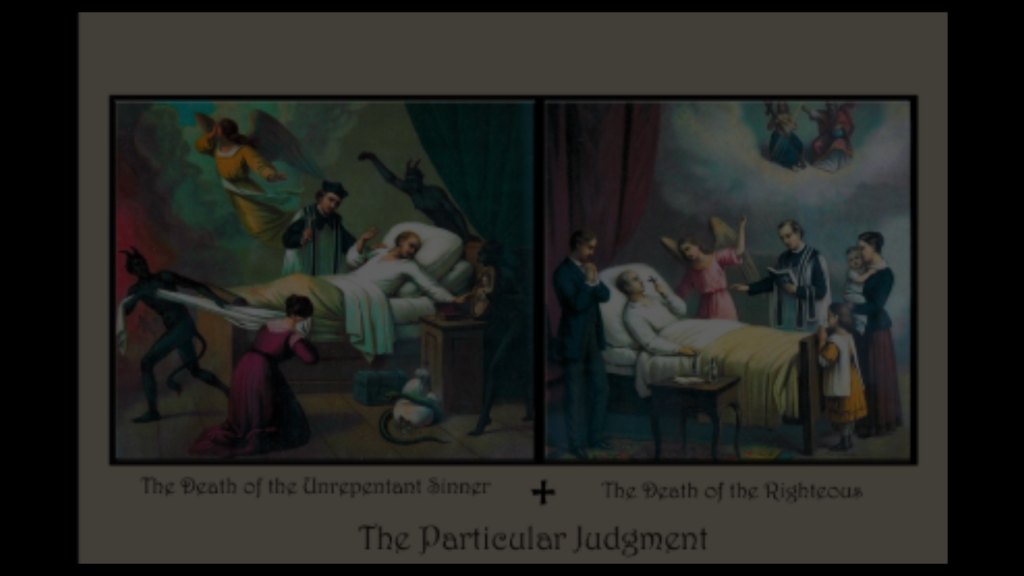
Redeemer wept at the consideration of the chastisement which was soon to be inflicted on the
city, and which he foretold to her inhabitants. ”Thy enemies shall cast a trench about thee. ”
Unhappy city! thou shalt one day see thyself encompassed by enemies, who shall beat thee
flat to the ground, and thy children in thee, and shall not leave in thee a stone upon a stone.
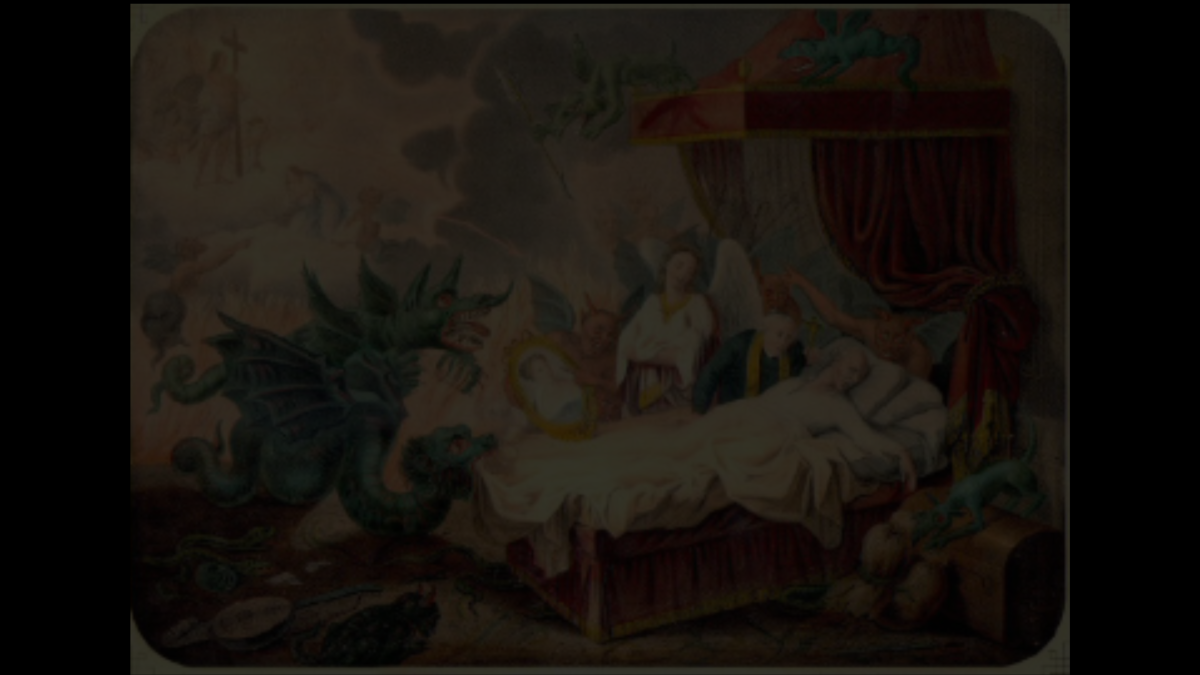
Most beloved brethren, this unhappy city is a figure of the soul of a sinner, who, at the hour
of death, shall find himself surrounded by his enemies first, by remorse of conscience;
secondly, by the assaults of the devils; and thirdly, by the fears of eternal death.
+
First Point. The sinner at death shall be tortured by remorses of conscience.
+
1. “Their soul shall die in a storm.” (Job xxxvi. 14.) The unhappy sinners who remain in sin
die in a tempest, with which God has beforehand threatened them. ”A tempest shall break
out and come upon the head of the wicked.” (Jer. xxiii. 19.) At the commencement of his
illness the sinner is not troubled by remorse or fear; because his relatives, friends, physicians,
and all tell him that his sickness is not dangerous; thus he is deceived and hopes to recover.
But when his illness increases, and malignant symptoms, the harbingers of approaching
death, begin to appear, then the storm with which the Lord has threatened the wicked shall
commence. “When sudden calamity shall fall on you, and destruction as a tempest shall be
at hand.” (Prov. i. 27.) This tempest shall be formed as well by the pains of sickness as by the
fear of being obliged to depart from this earth, and to leave all things; but still more by the
remorses of conscience, which shall place before his eyes all the irregularities of his past life.
”They shall come with fear at the thought of their sins, and their iniquities shall stand
against them to convict them.” (Wis. iv. 20.) Then shall his sins rush upon his mind, and fill
him with terror. His iniquities shall stand against him to convict him, and, without the aid of
other testimony, shall assail him, and prove that he deserves hell.
+
2. The dying sinner will confess his sins; but, according to St. Augustine, ”The repentance
which is sought from a sick man is infirm.” (Serm, xxxvii., de Temp.) And St. Jerome says,
that of a hundred thousand sinners who continue till death in the state of sin, scarcely one
shall be saved. ”Vix de centum milibus, quorum mala vita fuit, meretur in morte a Deo
indulgentiam, unus.” (Epis. de Mort. Eus.) St. Vincent Ferrer writes, that it is a greater
miracle to save such sinners, than to raise the dead to life. ”Majus miraculum est, quod male
viventes faciant bonum finem, quam suscitare mortuos.” (Serm. i., de Nativ. Virgin.) They
shall feel convinced of the evil they have done; they will wish, but shall not be able, to detest
it. Antiochus understood the malice of his sins when he said: ”Now I remember the evils that
I have done in Jerusalem.” (1 Mach. vi. 12.) He remembered his sins, but did not detest them.
He died in despair and oppressed with great sadness, saying: “Behold, I perish with great
grief in a strange land” (v. 13). According to St. Fulgentius, the same happened to Saul at the
hour of death: he remembered his sins; he dreaded the punishment which they deserved; but
he did not detest them. “Non odit quid fecerat, sed timuit quod nolebat.”
+
3. Oh! how difficult is it for a sinner, who has slept many years in sin, to repent sincerely at
the hour of death, when his mind is darkened, and his heart hardened!”His heart shall be as
hard as a stone, and as firm as a smiths anvil.” (Job xli. 15.) During life, instead of yielding to
the graces and calls of God, he became more obdurate, as the anvil is hardened by repeated
strokes of the hammer. ”A hard heart shall fare evil at the last.” (Eccl. iii. 27.) By loving sin
till death, he has loved the danger of his damnation, and therefore God will justly permit him
to perish in the danger in which he wished to live till death.
+
4. St. Augustine says, that he who is abandoned by sin before he abandons it, will scarcely
detest it as he ought at the hour of death; for he will then detest it, not through a hatred of
sin, but through necessity. ”Qui prius a peccato relinquitur, quam ipse relinquat, non libere,
sed quasi ex necessitate condemnat.” But how shall he be able to hate from his heart the sins
which he has loved till death? He must love the enemy whom till then he has hated, and he
must hate the person whom he has till that moment loved. Oh! what mountains must he
pass! He shall probably meet with a fate similar to that of a certain person, who kept in
confinement a great number of wild beasts in order to let them loose on the enemies who
might assail him. But the wild beasts, as soon as he unchained them, instead of attacking his
enemies, devoured himself. When the sinner will wish to drive away his iniquities, they shall
cause his destruction, either by complacency in objects till then loved, or by despair of
pardon at the sight of their numbers and enormity. “Evils shall catch the unjust man unto
destruction.” (Ps. cxxxix. 12.) St. Bernard says, that at death the sinner shall see himself
chained and bound by his sins. ”We are your works; we will not desert you.” We will not
leave you; we will accompany you to judgment, and will be your companions for all eternity
in hell.
+
Second Point. The dying sinner shall be tortured by the assaults of the devils.
+
5. ”The devil is come down unto you, having great wrath, knowing that he hath but a short
time.” (Apoc. xii. 12.) At death the devil exerts all his powers to secure the soul that is about
to leave this world; for he knows, from the symptoms of the disease, that he has but little
time to gain her for eternity. The Council of Trent teaches that Jesus Christ has left us the
sacrament of Extreme Unction as a most powerful defence against the temptations of the
devil at the hour of death. “Extremæ Unctionis sacramento finem vitæ tanquam firmissimo
quodam præsidio munivit.” And the holy council adds, that there is no time in which the
enemy combats against us with so much violence in order to effect our damnation, and to
make us despair of the divine mercy, as at the end of life. ”N ullum tempus est, quo
vehementius ille omnes suæ versutiæ nervos intendat at perendos, nos penitus, et a fiducia,
etiam, si possit, divinæ misericordiæ deturbandos, quam cum impendere nobis exitum vitæ
perspicet.” (Sess. 14, cap. ix. Doctr. de Sacr. Extr. Unct.)
+
6. Oh! how terrible are the assaults and snares of the devil against the souls of dyiug persons,
even though they have led a holy life! After his recovery from a most severe illness, the holy
king Eleazar said, that the temptations by which the devil assails men at death, can be
conceived only by him who has felt them. We read in the life of St. Andrew Avelliuo, that in
his agony he had so fierce a combat with hell, that all the religious present were seized with
trembling. They perceived that, in consequence of the agitation, his face swelled, and became
black, all his members trembled, and a flood of tears gushed from his eyes. All began to weep
through compassion, and were rilled with terror at the sight of a saint dying in such a
manner. But they were afterwards consoled, when they saw that as soon as an image of most
holy Mary was held before him, he became perfectly calm, and breathed forth his blessed
soul with great joy.
+
7. Now, if this happens to the saints, what shall become of poor sinners, who have lived in sin
till death? At that awful moment the devil does not come alone to tempt them in a thousand
ways, in order to bring them to eternal perdition, but he calls companions to his assistance.
“Their house shall be filled with serpents.” (Isa. xiii. 21.) When a Christian is about to leave
this world, his house is filled with devils, who unite together in order to effect his ruin. “All
her persecutors have taken her in the midst of straits.” (Lamen. i. 3.) All his enemies will
encompass him in the straits of death. One shall say: Be not afraid; you shall not die of this
sickness! Another will say: You have been for so many years deaf to the calls of God, and can
you now expect that he will save you? Another will ask: How can you repair the frauds of
your past life, and the injuries you have done to your neighbour in his property and
character? Another shall ask: What hope can there be for you? Do you not see that all your
confessions have been null that they have been made without true sorrow, and without a
firm purpose of amendment? How can you repair them with this heart, which you feel so
hard? Do you not see that you are lost? And in the midst of these straits and attacks of
despair, the dying sinner, full of agitation and confusion, must pass into eternity. ”The people
shall be troubled and they shall pass.” (Job xxxiv 20.)
+
Third Point. The dying sinner shall be tortured by the fears of eternal death.
+
8. Miserable the sick man who takes to his bed in the state of mortal sin! He that lives in sin
till death shall die in sin. “You shall die in your sin.” (John viii. 21.) It is true that, in
whatsoever hour the sinner is converted, God promises to pardon him; but to no sinner has
God promised the grace of conversion at the hour of death. ”Seek the Lord while he may be
found.” (Isa. iv. 6.) Then, there is for some sinners a time when they shall seek God and shall
not find him. “You shall seek me, and shall not find me.” (John vii. 34.) The unhappy beings
will go to confession at the hour of death; they will promise and weep, and ask mercy of God,
but without knowing what they do. A man who sees himself under the feet of a foe pointing
a dagger to his throat, will shed tears, ask pardon, and promise to serve his enemy as a slave
during the remainder of his life. But, will the enemy believe him? No; he will feel convinced
that his words are not sincere that his object is to escape from his hands, and that, should he
be pardoned, he will become more hostile than ever. In like manner, how can God pardon the
dying sinner, when he sees that all his acts of sorrow, and all his promises, proceed not from
the heart, but from a dread of death and of approaching damnation.
+
9. In the recommendation of the departing soul, the assisting priest prays to the Lord, saying:
”Recognize, O Lord, thy creature.” But God answers: I know that he is my creature; but,
instead of regarding me as his Creator, he has treated me as an enemy. The priest continues
his prayer, and says: ”Remember not his past iniquities. ” I would, replies the Lord, pardon
all the past sins of his youth; but he has continued to despise me till this moment the very
hour of his death. ”They have turned their back upon me, and not their face: and, in the time
of affliction, they will say: Arise, and deliver us. Where are the gods which thou hast made
thee? let them rise and deliver thee.” (Jer. ii. 27, 28.) You, says the Lord, have turned your
back upon me till death; “and do you now want me to deliver you from vengeance? Invoke
your own gods the creatures, the riches, the friends you loved more than you loved me. Call
them now to come to your assistance, and to save you from hell, which is open to receive
you. It now justly belongs to me to take vengeance on the insults you have offered me. You
have despised my threats against obstinate sinners, and have paid no regard to them.
”Revenge is mine, and I will repay them in due time, that their foot may slide.” (Deut. xxxii.
35.) The time of my vengeance is now arrived; it is but just to execute it.
+
This is precisely what happened to a certain person in Madrid, who led a wicked life, but, at
the sight of the unhappy death of a companion, went to confession, and resolved to enter a
strict religious order. But, in consequence of having neglected to put his resolution into
immediate execution, he relapsed into his former irregularities. Being reduced to great want,
he wandered about the world, and fell sick at Lima. From the hospital in which he took
refuge he sent for a confessor, and promised again to change his life, and to enter religion.
But, having recovered from his illness, he returned to his wickedness; and, behold! the
vengeance of God fell upon him. One day, his confessor, who was a missionary, in passing
over a mountain, heard a noise, which appeared to be the howling of a wild beast. He drew
near the place from which the noise proceeded, and saw a dying man, half rotten, and
howling through despair. He addressed to him some words of consolation. The sick man,
opening his eyes, recognized the missionary, and said: Have you, too, come to he a witness
of the justice of God? I am the man who made my confession in the hospital of Lima. I then
promised to change my life, but have not done so; and now I die in despair. And thus the
miserable man, amid these acts of despair, breathed forth his unhappy soul. These facts are
related by Father Charles Bovio (part iii., example 9).
+
10. Let us conclude the discourse. Tell me, brethren, were a person in sin seized with
apoplexy, and instantly deprived of his senses, what sentiments of pity would you feel at
seeing him die in this state; without the sacraments, and without signs of repentance! Is not
he a fool, who, when he has time to be reconciled with God, continues in sin, or returns to his
sins, and thus exposes himself to the danger of dying suddenly, and of dying in sin? “At
what hour you think not,” says Jesus Christ, “the Son of Man will come,” (Luke xiii. 40.) An
unprovided death, which has happened to so many, may also happen to each of us. And it is
necessary to understand, that all who lead a bad life, meet with an unprovided death, though
their last illness may allow them some time to prepare for eternity; for the days of that mortal
illness are days of darkness days of confusion, in which it is difficult, and even morally
impossible, to adjust a conscience burdened with many sins. Tell me, brethren, if you were
now at the point of death, given over by physicians, and in the last agony, how ardently
would you desire another month, or another week, to settle the accounts you must render to
God! And God gives you this time. He calls you, and warns you of the danger of damnation
to which you are exposed. Give yourself, then, instantly to God. What do you wait for? Will
you wait till he sends you to hell?”Walk whilst you have light.” (John xii. 35.) Avail
yourselves of this time and this light, which God gives you at this moment, and now, while it
is in your power, repent of all your past sins; for, a time shall come when you will be no
longer able to avert the punishment which they deserve.
+
[I entreat my reader to read Sermon xliv., or the Sermon for the Fifteenth Sunday after
Pentecost, on the practical death, or that which practically happens at the death of men of
the world. I know by experience that though it does not contain Latin texts, whenever I
preached that sermon, it produced a great impression, and left the audience full of terror.
A greater impression is made by practical than by speculative truths.]
+
Closing Advertisement! Help 88 Christian Families In Lebanon By Clicking The Image

Click Image To Get A Calendar

Click Image To Get A Lepanto Flag!

Views: 74