On The Importance Of The Love Of God
Written by AJ Baalman on October 24, 2026
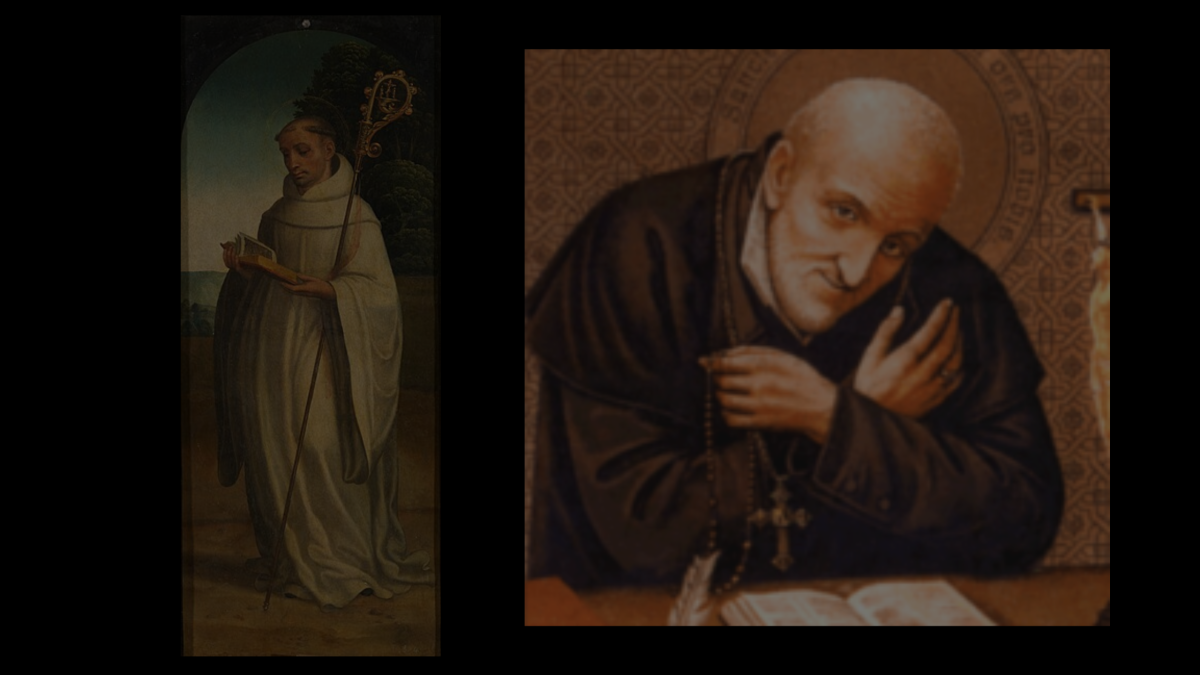
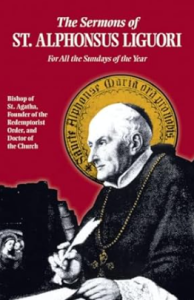
The Sermon Comes From This Book, Click Image To Get A Copy
“Thou shalt love the Lord thy God with thy whole heart.” MATT. xxii. 37.
+
” BUT one thing is necessary.” (Luke x. 42.) What is this one thing necessary? It is not
necessary to acquire riches, nor to ohtain dignities, nor to gain a great name. The only thing
necessary is to love God. Whatever is not done for the love of God is lost. This is the greatest
and the first commandment of the divine law. To the Pharisee who asked what is the greatest
commandment of the law, Jesus Christ answered: ”Thou shalt love the Lord thy God with
thy whole heart …. This is the greatest and first commandment.” (Matt. xxii. 37, 38.) But this,
which is the greatest of the commandments, is the most despised by men: there are few who
fulfil it. The greater part of men love their relatives, their friends, and even brute animals, but
do not love God. Of these St. John says that they have not life that they are dead. ”He that
loveth not, abideth in death.” (I John iii. 14.) St. Bernard writes, that the reward of a soul is
estimated by the measure of her love for God. ”Quan-titas animæ æstimatur de mensura
charitatis quam habet.” (Serm. xxvii., in Cant.) Let us consider today, in the first point, how
dear this command of loving God with our whole heart ought to be to us; and, in the second,
what we ought to do in order to love God with our whole heart.
+
First Point. How dear this command of loving God with our whole heart ought to be to us.
+
1. What object more noble, more magnificent, more powerful, more rich, more beautiful,
more bountiful, more merciful, more grateful, more amiable, or more loving, than himself,
could God give us to love? Who more noble than God? Some boast of the nobility of their
family for five hundred or a thousand years; but the nobility of God is eternal. He is the Lord
of all. Before God all the angels in heaven or all the nobles on earth are but as a drop of water
or a grain of dust. ”Behold the Gentiles are as a drop of a bucket behold the islands are as a
little dust. ” (Isa. xl. 15.) Who more powerful than God? He can do whatsoever he wills. By
an act of his will he has created this world, and by another act he can destroy it when he
pleases. Who more wealthy? He possesses all the riches of heaven and earth. Who more
beautiful? Before the beauty of God all the beauties of creatures disappear. Who more
bountiful? St. Augustine says, that God has a greater desire to do good to us than we have to
receive it. Who more merciful? If the most impious sinner on earth humble himself before
God, and repent of his sins, God instantly pardons and embraces him. Who more grateful?
He does not leave unrewarded the smallest act we perform for his sake. Who more amiable?
God is so amiable that, by barely seeing and loving him in heaven, the saints feel a joy which
makes them perfectly happy and content for all eternity. The greatest of the torments of the
damned arise from knowing that this God is so amiable, and that they cannot love him.
+
2. Finally, who more loving than God? In the Old Law, men might doubt whether God loved
them with a tender love; but, after seeing him die on a cross for us, how can we doubt of the
tenderness and the ardent affection with which he loves us? Let us raise our eyes and look at
Jesus, the true Son of God, fastened with nails to a gibbet, and let us consider the intensity of
the ove which he bears us. The cross, the wounds, says St. Bernard, cry out, and proclaim to
us that he truly loves us. “Clamat crux, clamat vulnus, quod ipse vere dilexit.” And what
more could he do to convince us of his great love than to lead a life of sorrow for thirty- three
years, and afterwards die in torments on the infamous tree of the cross, in order to wash
away our sins with his own blood?”Christ also hath loved us, and hath delivered himself up
for us.” (Eph. v. 2.)”Who hath loved us, and washed us from our sins in his own blood.”
(Apoc. i. 5.)”How,” says St. Philip Neri, ”is it possible for him who believes in God to love
anything but God ?” Contemplating God’s love towards men, St. Mary Magdalene de Pazzi
began one day to ring the bell, saying that she wished to invite all the nations of the earth to
love so loving a God. St. Francis de Sales used to say with tears: “To love our God it would
be necessary to have an infinite love; and we throw away our love on vain, contemptible
things.”
+
3. O! inestimable value of divine love, which makes us rich before God! It is the treasure by
which we gain his friendship. “he is an infinite treasure to men, which they that use become
the friends of God.” (Wis. vii. 14.) The only thing we ought to fear, says St. Gregory of Nyssa
(de Vita Moysis), is the loss of God‟s friendship; and the only object of our desires should be
its attainment. ”Unum terribile, arbitror, ab amicitia Dei repelli: unum solum expectibile,
amicitia Dei.” It is love that obtains the friendship of God. Hence, according to St. Lawrence
Justinian, by love the poor become rich, and without love the rich are poor. ”No greater
riches than to have charity. In charity the poor man is rich, and without charity the rich man
is poor.” (S. Laur. Just, in Matt. xiii. 44.) How great is the joy which a person feels in thinking
that he is loved by a man of exalted rank! But how much greater must be the consolation
which a soul derives from the conviction that God loves her!”I love them that love me.”
(Prov. viii. 17.) In a soul that loves God the Three Persons of the Adorable Trinity dwell. ”If
any one love me he will keep my word; and my Father will love him; and we will come to
him, and will make our abode with him.” (John xiv. 23.) St. Bernard writes, that among all the
virtues charity is the one that unites us to God. Charitas est virtus conjungens nos Deo.” St.
Catherine of Bologna used to say, that love is the golden chain that binds the soul to God. St.
Augustine says, that”love is a joint connecting the lover with the beloved.” Hence, were God
not immense, where should he be found? Find a soul that loves God, and there God is
certainly found. Of this St. John assures us. “He that abideth in charity abideth in God, and
God in him.” (1 John iv. 16.) A poor man loves riches, but he does not therefore enjoy them;
he may love a throne, but he does not therefore possess a kingdom. But the man that loves
God possesses God. ”He abideth in God, and God in him. ”
+
4. Besides, St. Thomas says (Tr. de Virt, art. 3), that love draws in its train all other virtues,
and directs them all to unite us more closely to God. Hence, because from charity all virtues
are born, St. Lawrence Justinian called it the mother of virtues. Hence, St. Augustine used to
say: ”Love, and do what you wish.” He that loves God can only do what is good; if he does
evil, he shows that he has ceased to love God. And when he ceases to love him, all things can
profit him nothing. If, said the Apostle, I give all my possessions to the poor, and my body to
the flames, and have not charity, I am nothing. ”And if I should distribute all my goods to
feed the poor, and if I should deliver my body to be burned, and have not charity, it profiteth
me nothing.” (1 Cor. xiii. 3.)
+
5. Love also prevents us from feeling the pains of this life. St. Bonaventure says, that the love
of God is like honey; it sweetens things the most bitter. And what more sweet to a soul that
loves God than to suffer for him? She knows that by cheerfully embracing sufferings she
pleases God, and that her pains shall be the brightest jewels in her crown in Paradise. And
who is there that will not willingly suffer and die in imitation of Jesus Christ, who has gone
before us, carrying his cross, to offer himself in sacrifice for the love of us, and inviting us to
follow his example? “If any man will come after me, let him take up his cross and follow
me.” (Matt. xvi. 24.) For this purpose he has condescended to humble himself to death, and to
the opprobrious death of the cross, for the love of us. ”He humbled himself, becoming
obedient unto death, even to the death of the cross.” (Phil. ii. 8.)
+
Second Point What we ought to do in order to love God with our whole heart.
+
6. St. Teresa used to say, that in calling a soul to his love, God bestows upon her an
exceedingly great favour. Since, then, most beloved brethren, God calls us all to his love, let
us thank and love him with our whole heart. Because he loves us intensely, he wishes to he
tenderly loved by us. ”When, ” says St. Bernard, ”God loves, he desires nothing else than to
he loved; for he loves only that he may be loved.” (Serm. lxiii., in Cant.) It was to inflame us
with his divine love that the Eternal Word descended from heaven. So he himself has
declared; adding, that he only desires to see this fire lighted up in our hearts. ”I am come to
cast fire on the earth, and what will I but that it be kindled?” (Luke xii. 49.) Let us now see
what means we ought to adopt in order to love God.
+
7. In the first place, we ought to guard against every sin, whether mortal or venial. ”If, ” says
Jesus Christ, ”any one love me, he will keep my word.” (John xiv. 23.) The first mark of love is
to endeavour not to give the smallest displeasure to the beloved. How can he be said to love
God with his whole heart, who is not afraid to commit deliberate venial offences against
God? St. Teresa used to say to her spiritual children: ”From deliberate sin, however small,
may God deliver you.” But some will say: Venial sin is a small evil. Is it a small evil to
displease a God who is so good, and who loves us so tenderly?
+
8. In the second place, to love God with the whole heart, it is necessary to have a great desire
to love him. Holy desires are the wings with which we fly to God; for, as St. Lawrence
Justinian says, a good desire gives us strength to go forward, and lightens the labour of
walking in the way of God. ”Vires subministrat, posnam exhibet leviorem.” According to the
spiritual masters, he that does not advance in the way of the Lord goes back; but, on the other
hand, God cheerfully gives himself to those who seek after him. ”The Lord is good to the soul
that seeketh him.” (Lamen. iii. 25.) He fills with his own good things all who desire him
through love. ”He hath filled the hungry with good things.” (Luke i. 53.)
+
9. In the third place, it is necessary to resolve courageously, to arrive at the perfect love of
God. Some persons desire to belong entirely to God, but do not resolve to adopt the means. It
is of them the Wise Man says, ”Desires kill the soul.” (Prov. xxi. 25.) I would wish, they say,
to become a saint; but still, with all their desires, they never advance a single step. St. Teresa
used to say, that”of these irresolute souls the devil is never afraid.” Because, if they do not
resolve sincerely to give themselves to God without reserve, they shall always continue in the
same imperfections. But, on the other hand, the saint says, that God wishes only from us a
true resolution to become saints; he himself will do the rest. If, then, we wish to love God
with our whole heart, we must resolve to do without reserve what is most pleasing to him,
and to begin at once to put our hands to the work. ”Whatsoever thy hand is able to do, do it
earnestly.” (Eccl. ix. 10.) What you can do Today do not put off till to-morrow; do it as soon
as possible. A certain nun in the convent of Tori degli Speechi, in Rome, led a tepid life; but,
being called by God, in a retreat, to his perfect love, she resolved to correspond immediately
to the divine call, and said to her director, with a sincere resolution: ”Father, I wish to
become a saint, and to become one immediately.” And from that moment, with the aid of
God’s grace, she lived and died a saint. We must, then, resolve to acquire the perfect love of
God, and must immediately adopt the means of becoming saints.
+
10. The first means is, to detach the heart from all creatures, and to banish from the soul
every affection which is not for God. The first question which the ancient fathers of the desert
put to every one who sought admission into their society was: “Do you bring an empty heart,
that the Holy Ghost may be able to fill it ?” If the world be not expelled from the heart, God
cannot enter it. St. Teresa used to say: “Detach the heart from creatures; seek God, and you
shall find him.” St. Augustine writes, that the Romans worshipped thirty thousand gods; but,
among these gods the Roman Senate refused to admit Jesus Christ. Because, said they, he is a
proud God, who requires that he alone should be adored. This they had reason to say; for our
God wishes to possess our whole souls. He is, as St. Jerome says, a jealous God. ”Zelotypus
est Jesus.” And therefore lie will have no rival in the affections of our heart. Hence, the
Spouse in the Canticles is called “an enclosed garden.” “My sister, my spouse is an enclosed
garden.” (Cant. iv. 12.) The soul, then, that wishes to belong entirely to God, must be shut
against all love which is not for God.
+
11. Hence the Divine Spouse is said to be wounded by one of the eyes of his eyes. ”Thou hast
wounded my heart, my sister, my spouse; thou hast wounded my heart with one of thy eyes.”
(Cant. iv. 9.) One of her eyes signifies, that in all her thoughts and actions the only end of the
spouse is to please God; while, in their devout exercises, worldlings propose to themselves
different objects sometimes their own interest, sometimes to please their friends, and
sometimes to please themselves. But the saints seek only to please God, to whom they turn,
and say: ”What have I in heaven? and, besides thee, what do I desire upon earth? Thou art
the God of my heart, and the God that is my portion for ever.” (Ps. Ixxii. 25, 26.) We should
do the same if we wished to be saints. If, says St. Chrysostom, we do some things pleasing to
God, what else but his pleasure do we seek? “Si dignus fueris agere aliquid, quod Deo placet,
aliam præter id mercedem requiris ?” (Lib. 2, de Compunct. Cord.) What greater reward can a
creature obtain than to please its Creator? Hence, in all we desire or do, we should seek
nothing but God. A certain solitary, called Zeno, walking through the desert, absorbed in
thought, met the Emperor Macedonius going to hunt. The emperor asked him what he was
doing. In answer, the solitary said: You go in quest of animals, and I seek God alone. St.
Francis de Sales used to say, that the pure love of God consumes all that is not God.
+
12. Moreover, to love God with our whole heart, it is necessary tolove him without reserve.
Hence we must love him with a love of preference. We must prefer him before every other
good, and must be resolved to lose a thousand lives, rather than forfeit his friendship. We
must say with St. Paul: Neither death, nor life, nor angels, nor principalities, nor powers, nor
things present, nor things to come, nor any other creature, shall be able to separate us from
the love of God.” (Rom. viii. 38, 39.) We must also love him with a love of benevolence,
desiring to see him loved by all: and therefore, if we love God, we should seek as much as
possible to kindle in others the fire of his love, or, at least, should pray for the conversion of
all who do not love him. We must love him with a love of sorrow, regretting every offence
offered to him more than every evil which we could suffer. We must love him with a love of
conformity to the divine will. The principal office of love is to unite the will of lovers, and to
make the soul say: “Lord, what wilt thou have me to do?” (Acts ix. 6.) Lord, tell me what
thou dost wish from me; I desire to do it. I wish for nothing; I wish only what thou wiliest.
Hence, we ought frequently to offer ourselves to God without reserve, that he may do with
us, and with all we have, whatever he pleases. We must love God with a love of patience.
This is that strong love by which true lovers are known. ”Love is strong as death.” (Cant. viii.
6.) “There is nothing too difficult,” says St. Augustine, ”to be conquered by the fire of love.”
(Lib. De Mor. Eccl, c. xxii.) For, adds the saint, in doing what we love, labour is not felt, or, if
it be felt, the very labour is loved. “In eo quod arnatur, aut non laboratur, aut labor amatur.”
St. Vincent of Paul used to say, that love is measured by the desire of the soul to suffer and be
humbled, in order to please God. Let God be pleased, though it should cost us the loss of our
life and of all things. To gain all, it is necessary to leave all. All for all, said Thomas a Kempis.
The reason we do not become saints is, as St. Teresa says, because, as we do not give God all
our affections, so he does not give us his perfect love. We must then say with tbe spouse in
the Canticles: “My beloved to me, and I to him.” (Cant. ii. 1 6.) My beloved has given himself
entirely to me: it is but just that I give myself without reserve to him. St. John Chrysostom
says, that when a soul has given herself entirely to God, she no longer cares for ignominies
and sufferings; she loses the desire of all things; and not finding repose in any creature, she is
always in search cf her beloved; her sole concern is to find her beloved.
+
13. To obtain and to preserve divine love, three things are necessary: meditation,
communion, and prayer. First, meditation is necessary. He who thinks but little on God,
loves him but little. “In my meditation, ” says David, “a fire shall flame out.” (Ps. xxxviii. 4.)
Meditation, and particularly meditation on the passion of Jesus Christ, is the blessed furnace
in which the love of God is kindled and fanned. “He brought me into the wine cellar; he set in
order charity in me. ” (Cant. ii. 4.) The souls that are introduced into this heavenly cellar, by a
single glance of Jesus Christ crucified and dying for the love of us, are wounded and
inebriated with holy love. For St. Paul says, that Jesus Christ died for us all, that each of us
may live only to love him. ”And Christ died for all, that they also may not now live to
themselves, but unto him who died for them. ” (2 Cor. v. 15.) The communion is another holy
furnace, in which we are inflamed with divine love. ”The holy eucharist, ” says St.
Chrysostom, ”is a fire which inflames us, that, like lions breathing fire, we may retire from
the holy table, being made terrible to the devil. ” (Hom, xli., ad Pop.) Above all, prayer (the
prayer of petition) is necessary. It is by means of prayer that God dispenses all his favours,
but particularly the great gift of divine love. To make us ask this love, meditation is a great
help. “Without meditation we shall ask little or nothing from God. “We must, then, always,
every day, and several times in the day, ask God to give us the grace to love him with our
whole heart. St. Gregory says, that God wishes to be compelled and importuned by our
petitions to bestow upon us his graces. ”God wishes to be entreated to be compelled: he
wishes in a certain manner to be overcome by importunity.” Let us, then, continually ask of
Jesus Christ his holy love; and let us ask his divine mother Mary, who is the treasurer of all
his graces, to obtain it for us. Thesauraria gratiarum (Idiota). She is called by St. Bernardino,
the dispensatrix of God’s graces. ”All graces are dispensed through her hands.” t is through
her intercession that we must obtain the great gift of divine love.
+
Closing Advertisement! Learn About Ordo Militaris & Their Current Fundraisers
Click Image To Read The August Circular Letter

Click Image To Donate:

Click Image To Donate To Help Lebanese Christians

Click Image To Get A Calendar

Click Image To Get A Lepanto Flag & Poster!

Please Consider Donating, $19,900 To Go, To Help Get Medical Equipment For Ukraine

Views: 7
Reader's opinions
You may also like
Continue reading