Fourth Sunday Of Lent: ON THE TENDER COMPASSION WHICH JESUS CHRIST ENTERTAINS TOWARDS SINNERS
Written by AJ Baalman on March 15, 2026

Once Again, The Sermon Comes From This Book, Click The Image To Get A Copy
Read The Sermon Of The First Sunday Of Lent
Read The Sermon Of The Second Sunday Of Lent
Read The Sermon Of The Third Sunday Of Lent
“Make the men sit down.” JOHN vi. 10.
+
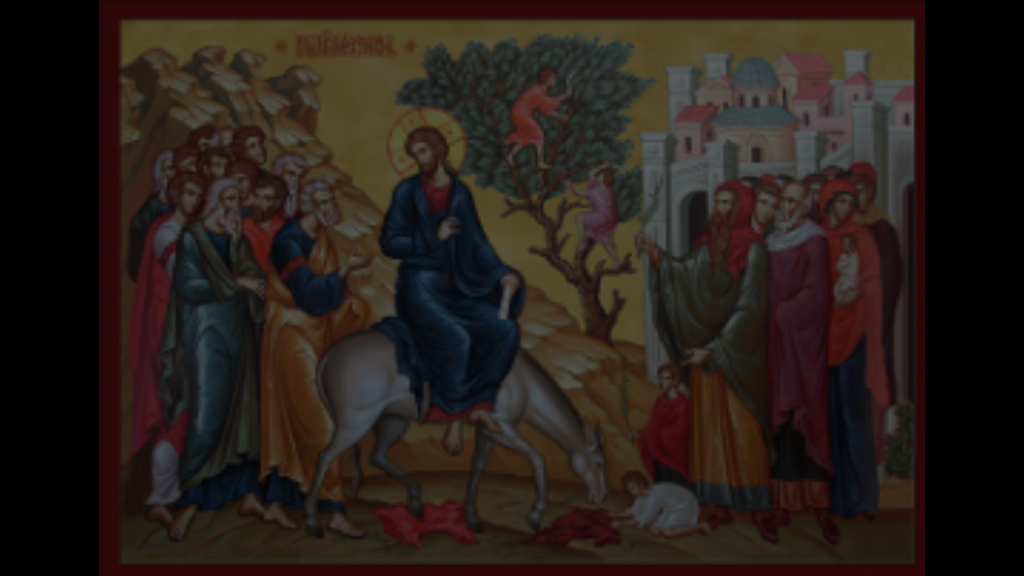
WE read in this day’s gospel that, having gone up into a mountain with his disciples, and
seeing a multitude of five thousand persons, who followed him because they saw the
miracles which he wrought on them that were diseased, the Redeemer said to St. Philip:
“Whence shall we huy bread, that these may eat ?”
“Lord,” answered St. Philip, ”two hundred pennyworth of bread is not sufficient that every one may take a little.”
St. Andrew then said: There is a boy here that has five barley loaves and two fishes; but what are these
among so many? But Jesus Christ said: ”Make the men sit down.” And he distributed the
loaves and fishes among them. The multitude were satisfied: and the fragments of bread
which remained filled twelve baskets. ” The Lord wrought this miracle through compassion
for the bodily wants of these poor people; but far more tender is his compassion for the
necessities of the souls of the poor that is, of sinners who are deprived of the divine grace.
This tender compassion of Jesus Christ for sinners shall be the subject of this day’s discourse.
+
1. Through the bowels of his mercy towards men, who groaned under the slavery of sin and
Satan, our most loving Redeemer descended from heaven to earth, to redeem and save them
from eternal torments by his own death. Such was the language of St. Zachary, the father of
the Baptist, when the Blessed Virgin, who had already become the mother of the Eternal
Word, entered his house. ”Through the bowels of the mercy of our God, in which the Orient
from on high hath visited us.” (Luke i. 78.)
+
2. Jesus Christ, the good pastor, who came into the world to obtain salvation for us his sheep,
has said: ”I am come that they may have life, and may have it more abundantly.” (John x.
10.) Mark the expression, “more abundantly” which signifies that the Son of Man came on
earth not only to restore us to the life of grace which we lost, but to give us a better life than
that which we forfeited by sin. Yes; for as St. Leo says, the benefits which we have derived
from the death of Jesus are greater than the injury which the devil has done us by sin.
”Ampliora adepti sumus per Christ! gratiam quam per diaboli amiseramus invidiam.” (Ser.
i., de Ascen.) The same doctrine is taught by the Apostle, who says that, “where sin
abounded, grace did more abound.” (Rom. v. 20.)
+
3. But, my Lord, since thou hast resolved to take human flesh, would not a single prayer
offered by thee be sufficient for the redemption of all men? What need, then, was there of
leading a life of poverty, humiliation, and contempt, for thirty- three years, of suffering a
cruel and shameful death on an infamous gibbet, and of shedding all thy blood by dint of
torments? I know well, answers Jesus Christ, that one drop of my blood, or a simple prayer,
would be sufficient for the salvation of the world; but neither would be sufficient to show the
love which I bear to men: and therefore, to be loved by men when they should see me dead
on the cross for the love of them, I have resolved to submit to so many torments and to so
painful a death. This, he says, is the duty of a good pastor. ”I am the good shepherd. The good
shepherd giveth his life for his sheep… I lay down my life for my sheep.” (John x. 11, 15.)
+
4. O men, O men, what greater proof of love could the Son of God give us than to lay down
his life for us his sheep?”In this we have known the charity of God; because he hath laid
down his life for us.” (I John iii. 16.) No one, says the Saviour, can show greater love to his
friends than to give his life for them. “Greater love than this no man hath, that a man lay
down his life for his friends.” (John xv. 13.) But thou, O Lord, hast died not only for friends,
but for us who were thy enemies by sin. “When we were enemies, we were reconciled to God
by the death of his Son.” (Rom. v. 10.) infinite love of our God, exclaims St. Bernard;”to spare
slaves, neither the Father has spared the Son, nor the Son himself.” To pardon us, who were
rebellious servants, the Father would not pardon the Son, and the Son would not pardon
himself, but, by his death, has satisfied the divine justice for the sins which we have
committed.
+
5. When Jesus Christ was near his passion he went one day to Samaria: the Samaritans
refused to receive him. Indignant at the insult offered by the Samaritans to their Master,
St.James and St. John, turning to Jesus, said: ”Lord, wilt thou that we command fire to come
down from heaven and consume them ?” (Luke ix. 54.) But Jesus, who was all sweetness, even
to those who insulted him, answered: ”You know not of what spirit you are. The Son of Man
came not to destroy souls, but to save.” (r. 55 and 50.) He severely rebuked the disciples.
What spirit is this, he said, which possesses you? It is not my spirit: mine is the spirit of
patience and compassion; for I am come, not to destroy, but to save the souls of men: and you
speak of fire, of punishment, and of vengeance. Hence, in another place, he said to his
disciples: “Learn of me, because I am meek and humble of heart.” (Matt. xi. 29 ) I do not wish
of you to learn of me to chastise, but to be meek, and to bear and pardon injuries.
+
6. How beautiful has he described the tenderness of his heart towards sinners in the
following words: ”What man of you that hath an hundred sheep: and, if he lose one of them,
doth he not leave ninety-nine in the desert, and go after that which is lost until he find it:
and when he hath found it, lay it upon his shoulder rejoicing; and coming home, call together
his friends and neighbours, saying to them: Rejoice with me, because I have found my sheep
that was lost ?” (Luke xv. 4, 5, and 6.) But, Lord, it is not thou that oughtest to rejoice, but the
sheep that has found her pastor and her God. The sheep indeed, answers Jesus, rejoices at
finding me, her shepherd; but far greater is the joy which 1 feel at having found one of my
lost sheep. He concludes the parable in these words: ”I say to you, that even so there shall be
joy in heaven, for one sinner that doth penance, more than upon ninety-nine just, who need
not penance.” (Luke xv. 7.) There is more joy in heaven at the conversion of one sinner, than
upon ninety-nine just men who preserve their innocence. What sinner, then, can be so
hardened as not to go instantly and cast himself at the feet of his Saviour, when he knows the
tender love with which Jesus Christ is prepared to embrace him, and carry him on his
shoulders, as soon as he repents of his sins?
+
7. The Lord has also declared his tenderness towards penitent sinners in the parable of the
Prodigal Child. (Luke xv. 12, etc.) In that parable the Son of God says, that a certain young
man, unwilling to be any longer under the control of his father, and desiring to live according
to his caprice and corrupt inclinations, asked the portion of his fathers substance which fell to
him. The father gave it with sorrow, weeping over the ruin of his son. The son departed from
his father’s house. Having in a short time dissipated his substance, he was reduced to such a
degree of misery that, to procure the necessaries of life, he was obliged to feed swine. All this
was a figure of a sinner, who, after departing from God, and losing the divine grace and all
the merits he had acquired, leads a life of misery under the slavery of the devil. In the gospel
it is added that the young man, seeing his wretched condition, resolved to return to his
father: and the father, who is a figure of Jesus Christ, seeing his son return to him, was
instantly moved to pity. “His father saw him, and was moved with compassion” (v. 20); and,
instead of driving him away, as the ungrateful son had deserved, “running to him, he fell
upon his neck and kissed him.” He ran with open arms to meet him, and, through tenderness,
fell upon his neck, and consoled him by his embraces. He then said to his servants: ”Bring
forth quickly the first robe, and put it on him.” According to St. Jerome and St. Augustine,
the first robe signifies the divine grace, which, in addition to new celestial gifts, God, by
granting pardon, gives to the penitent sinner. “And put a ring on his finger.” Give him the
ring of- a spouse. By recovering the grace of God, the soul becomes again the spouse of Jesus
Christ. “And bring hither the fatted calf, and kill it, and let us eat and make merry” (v. 23).
Bring hither the fatted calf which signifies the holy communion, or Jesus in the holy
sacrament mystically killed and offered in sacrifice on the altar; let us eat and rejoice. But
why, divine Father, so much joy at the return of so ungrateful a child? Because, answered the
Father, this my son was dead, and he is come to life again; he was lost, and I have found him.
+
8. This tenderness of Jesus Christ was experienced by the sinful woman (according to St.
Gregory, Mary Magdalene) who cast herself at the feet of Jesus, and washed them with her
tears. (Luke vii. 47 and 50.) The Lord, turning to her with sweetness, consoled her by saying:
“Thy sins are forgiven ;… thy faith hath made thee safe; go in peace.” (Luke vii. 48 and 50.)
Child, thy sins are pardoned; thy confidence in me has saved thee; go in peace. It was also felt
by the man who was sick for thirty- eight years, and who was infirm, both in body and soul.
The Lord cured his malady, and pardoned his sins. “Behold,” says Jesus to him, ”thou art
made whole; sin no more, lest some worse thing happen to thee.” (John v. 14.) The tenderness
of the Redeemer was also felt by the leper who said to Jesus Christ: ”Lord, if thou wilt, thou
canst make me clean.” (Matt. viii. 2.) Jesus answered: “I will: be thou made clean” (v. 3). As if
he said: Yes; I will that thou be made clean; for I have come down from heaven for the
purpose of consoling all: be healed, then, according to thy desire. ”And forthwith his leprosy
was cleansed.”
+
9. We have also a proof of the tender compassion of the Son of God for sinners, in his conduct
towards the woman caught in adultery. The scribes and pharisees brought her before him,
and said: ”This woman was even now taken in adultery. Now Moses, in the law, commands
us to stone such a one. But what sayest thou ?” (John viii. 4 and 5.) And this they did, as St.
John says, tempting him. They intended to accuse him of transgressing the law of Moses, if he
said that she ought to be liberated; and they expected to destroy his character for meekness,
if he said that she should be stoned. “Si dicat lapidandam,” says St. Augustine, ”famam
perdet mansuetudinis; sin dimmitteudam, transgressæ legis accusabitur.” (Tract, xxxiii. in
Joan.)But what was the answer of our Lord? He neither said that she should be stoned nor
dismissed; but, ”bowing himself down, he wrote with his finger on the ground.” The
interpreters say that, probably, what he wrote on the ground was a text of Scripture
admonishing the accusers of their own sins, which were, perhaps, greater than that of the
woman charged with adultery. ”He then lifted himself up, and said to them: He that is
without sin among you, let him first cast a stone at her”(v . 7). The scribes and pharisees
went away one by one, and the woman stood alone. Jesus Christ, turning to her, said: “Hath
no one condemned thee? neither will I condemn thee. Go, and now sin no more” (v. 11). Since
no one has condemned you, fear not that you shall be condemned by me, who hath come on
earth, not to condemn, but to pardon and save sinners: go in peace, and sin no more.
+
10. Jesus Christ has come, not to condemn, but to deliver sinners from hell, as soon as they
resolve to amend their lives. And when he sees them obstinately bent on their own perdition,
he addresses them with tears in the words of Ezechiel: ”Why will you die, O house of
Israel?” (xviii. 31). My children, why will you die? Why do you voluntarily rush into hell,
when I have come from heaven to deliver you from it by death? He adds: you are already
dead to the grace of God. But I will not your death: return to me, and I will restore to you the
life which you have lost. “For I desire not the death of him that dieth, saith the Lord God:
return ye and live” (v. 32). But some sinners, who are immersed in the abyss of sin, may say:
Perhaps, if we return to Jesus Christ, he will drive us away. No; for the Redeemer has said:
”And him that cometh to me I will not cast out.” (John vi. 37.)
No one that comes to me with sorrow for his past sins, however manifold
and enormous they may have been, shall be rejected.
+
11. Behold how, in another place, the Redeemer encourages us to throw ourselves at his feet
with a secure hope of consolation and pardon. ”Come to me, all you that labour and are
burdened, and I will refresh you.” (Matt. xi. 28.) Come to me, all ye poor sinners, who labour
for your own damnation, and groan under the weight of your crimes; come, and I will deliver
you from all your troubles. Again, he says, ”Come and accuse me, saith the Lord; if your sins
be as scarlet, they shall be made white as snow; and if they be red as crimson, they shall be
made white as wool.” (Isa. i. 18.) Come with sorrow for the offences you committed against
me, and if I do not give you pardon, accuse me. As if he said: upbraid me; rebuke me as a
liar; for I promise that, though your sins were of scarlet that is, of the most horrid enormity
your soul, by my blood, in which I shall wash it, will become white and beautiful as snow.
+
12. Let us then, sinners, return instantly to Jesus Christ. If we have left him, let us
immediately return, before death overtakes us in sin and sends us to hell, where the mercies
and graces of the Lord shall, if we do not amend, be so many swords which shall lacerate the
heart for all eternity.
+
Please Consider Joining The New Ordo Militaris Catholicus Fundraiser To Help Christians

Or Click Image To Go To Page

Views: 22