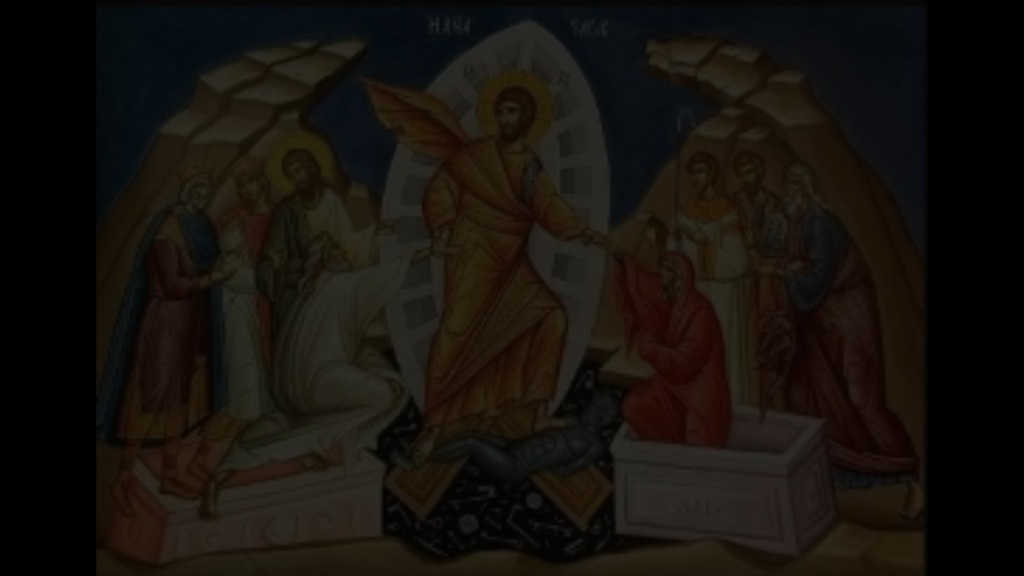
Easter Sunday: ON THE MISERABLE STATE OF RELAPSING SINNERS.
Written by AJ Baalman on April 5, 2026
The Sermon Comes From This Book, Click Image To Get A Copy

” Be not affrighted: you seek Jesus of Nazareth, who was crucified. He is risen; he is not
here.” MARK xvi. 6.
+
I HOPE, my dear Christians, that, as Christ is risen, you have in this holy paschal time, gone
to confession, and have risen from your sins. But, attend to what St. Jerome teaches that
many begin well, but few persevere. “Incipere multorem est, perseverare paucorum.” Now
the Holy Ghost declares, that he who perseveres in holiness to death, and not they who begin
a good life, shall be saved. “But he that shall persevere to the end, he shall be saved.” (Matt.
xxiv. 13.) The crown of Paradise, says St. Bernard, is promised to those who commence, but it
is given only to those who persevere. ”Inchoantibus præmium promittitur, perseverantibus
datur.” (Ser. vi. Deinodo bene viv.) Since, then, brethren, you have resolved to give
yourselves to God, listen to the admonition of the Holy Ghost: ”Son, when thou comest to the
service of God, stand in justice and in fear, and prepare thyself for temptation.” (Eccl. ii. 1.)
Do not imagine that you shall have no more temptations, but prepare yourself for the
combat, and guard against a relapse into the sins you have confessed; for, if you lose the
grace of God again, you shall find it difficult to recover it. I intend this day to show you the
miserable state of relapsing sinners; that is, of those who, after confession, miserably fall back
into the sins which they confessed.
+
1. Since, then, dearly beloved Christians, you have made a sincere confession of your sins,
Jesus Christ says to you what he says to the paralytic: “Behold, thou art made whole. Sin no
more, lest some worse thing happen to thee.” (John v. 14.)
By the confessions which you have made your souls are healed, but not as yet saved;
for, if you return to sin, you shall be again condemned to hell,
and the injury caused by the relapse shall be far greater than that which
you sustained from your former sins. “Audis,” says St. Bernard, “recidere quam incidere, esse
deterius.” If a man recover from a mortal disease, and afterwards fall back into it, he shall
have lost so much of his natural strength, that his recovery from the relapse will be
impossible. This is precisely what will happen to relaxing sinners; returning to the vomit that
is, taking back into the soul the sins vomited forth in confession they shall be so weak, that
they will become objects of amusement to the devil. St. Anselm says, that the devil acquires a
certain dominion over them, so that he makes them fall, and fall again as he wishes. Hence
the miserable beings become like birds with which a child amuses himself. He allows them,
from time to time, to fly to a certain height, and then draws them back again when he
pleases, by means of a cord made fast to them. Such is the manner in which the devil treats
relapsing sinners. “Sed quia ab hoste tenentur, volantes in eadem vitia dejiciuntur.”
+
2. St. Paul tells us, that we have to contend not with men like ourselves, made of flesh and
blood, but with the princes of hell. “Our wrestling is not against flesh and blood, but against
principalities and powers.” (Ephes. vii. 12.) By these words he wishes to admonish us that we
have not strength to resist the powers of hell, and that, to resist them, the divine aid is
absolutely necessary: without it, we shall be always defeated; but, with the assistance of
God’s grace, we shall, according to the same apostle, be able to do all things and shall
conquer all enemies. “I can do all things in him who strengtheneth me.” (Phil. iv. 13.) But this
assistance God gives only to those who pray for it. “Ask, and it shall be given you; seek, and
you shall find.” (Matt. vii. 7.) They who neglect to ask, do not receive. Let us, then, be careful
not to trust in our resolutions: if we place our confidence in them, we shall be lost. When we
are tempted to relapse into sin, we must put our whole trust in the assistance of God, who
infallibly hears all who invoke his aid.
+
3”He that thinketh himself to stand, let him take heed lest he fall.” (1 Cor. x. 12.) They who
are in the state of grace should, according to St. Paul, be careful not to fall into sin,
particularly if they have been ever guilty of mortal sins; for a relapse into sin brings greater
evil on the soul. “And the last state of that man becomes worse than the first. ”(Luke xi. 26.)
+
4. We are told in the Holy Scriptures, that the enemy “will offer victims to his drag, and will
sacrifice to his net; because through them his meat is made dainty.” (Habac. i. 16.) In
explaining this passage St. Jerome says, that the devil seeks to catch in his nets all men, in
order to sacrifice them to the divine justice by their damnation. Sinners, who are already in
the net, he endeavours to bind with new chains; but the friends of God are his “dainty
meats.” To make them his slaves, and to rob them of all they have acquired, he prepares
stronger snares. “The more fervently,” says Denis the Carthusian, “a soul endeavours to serve
God, the more fiercely does the adversary rage against her.” The closer the union of a
Christian with God, and the greater his efforts to serve God, the more the enemy is aimed
with rage, and the more strenuously he labours to enter into the soul from which he has been
expelled. “When,” says the Redeemer, ”the unclean spirit is gone out of a man, seeking rest,
and not finding, he saith: I will return into my house, whence I came out.” (Luke xi. 24.)
Should he succeed in re-entering, he will not enter alone, but will bring with him associates
to fortify himself in the soul of which he has again got possession.
Thus, the second destruction of that miserable soul shall be greater than the first.
“And the last state of that man becomes worse than the first.” (Luke xi. 26.)
+
5. To God, the relapse of ungrateful Christians is very displeasing. Because, after he had
called and pardoned them with so much love, he sees that, forgetful of his mercies to them,
they again turn their back upon him and renounce his grace. “If my enemy had reviled me, I
would verily have borne with it. But thou, a man of one mind, my guide and familiar, who
didst take sweet meats together with me. ” (Ps. liv. 13, etc.) Had my enemy, says the Lord,
insulted me, I would have felt less pain; but to see you rebel against me, after I had restored
my friendship to you, and after I had made you sit at my table, to eat my own flesh, grieves
me to the heart, and impels me to take vengeance on you. Miserable the man who, after
having received so many graces from God, becomes the enemy, from being the friend of God.
He shall find the sword of divine vengeance prepared to chastise him. “And he that passes
over from justice to sin, God hath prepared such an one for the sword.” (Eccl. xxvi. 27.)
+
6. Some of you may say: If I relapse, I will soon rise again; for I will immediately prepare
myself for confession. To those who speak in this manner shall happen what befell Samson.
He allowed himself to be deluded by Dalila: while he was asleep she cut off his hair, and his
strength departed from him. Awaking from sleep, he said: “I will go out as I did before, and
shake myself, not knowing that the Lord was departed from him. ” (Judges xvi. 20.) He
expected to deliver himself as on former occasions, from the hands of the Philistines. But,
because his strength had departed from him, he was made their slave. They pulled out his
eyes, and binding him in chains, shut him up in prison. After relapsing into sin, a Christian
loses the strength necessary to resist temptations, because “the Lord departs from him.” He
abandons him by withholding the efficacious aid necessary to overcome temptations; and the
miserable man remains blind and abandoned in his sin.
+
7. “No man putting his hand to the plough, and looking back is fit for the Kingdom of God.”
(Luke ix. 62.) Behold a faithful picture of a relapsing sinner. Mark the words no man: no one,
says Jesus Christ, who begins to serve me, and looks back, is fit to enter heaven. According to
Origen, the addition of a new sin to one committed before, is like the addition of a new
wound to a wound just inflicted. “Cum peccatum peccato adjicitur, sicut vulnus vulneri.”
(Hom. i. in Ps.) If a wound be inflicted on any member of the body, that member certainly
loses its original vigour. But, if it receives a second wound, it shall lose all strength and
motion, without hope of recovery. The great evil of a relapse into sin is, that it renders the
soul so weak that she has but little strength to resist temptation. For St. Thomas says, “After a
fault has been remitted, the dispositions produced by the preceding acts remain.” (1 p., qu.
86, art. 5.) Every sin, though pardoned, always leaves a wound on the soul. When to this
wound a new one is added, the soul becomes so weak that, without a special and
extraordinary grace from God, it is impossible for her to conquer temptations.
+
8. Let us, then, brethren, tremble at the thought of relapsing into sin, and let us beware of
availing ourselves of the mercy of God to continue to offend him. ”He,” says St. Augustine,
”who has promised pardon to penitents, has promised repentance to no one.” God has
indeed promised pardon to all who repent of their sins, but he has not promised to any one
the grace to repent of the faults which he has committed. Sorrow for sin is a pure gift of God;
if he withholds it, how will you repent? And without repentance, how can you obtain
pardon? Ah! the Lord will not allow himself to be mocked. ”Be not deceived,” says St. Paul,
”God is not mocked.” (Gal. vi. 7.) St. Isidore tells us, that the man who repeats the sin which
he before detested, is not a penitent, but a scoffer of God’s majesty. “Irrisor, et non pœnitens
est, pui adhuc agit, quod pœnitet.” (De Sum. Bono.) And Tertullian teaches, that where there
is no amendment, repentance is not sincere. ”Ubi emendatio nulla, pœnitentia nulla.” (De
Pœnit.)
+
9. “Be penitent,” said St. Peter in a discourse to the Jews, ”and be converted, that your sins
may be blotted out.” (Acts iii. 19.) Many repent, but are not converted. They feel a certain
sorrow for the irregularities of their lives, but do not sincerely return to God. They go to
confession, strike their breasts, and promise to amend; but they do not make a firm resolution
to change their lives. They who resolve firmly on a change of life, persevere, or at least
preserve themselves for a considerable time in the grace of God. But they who relapse into
sin soon after confession, show, as St. Peter says, that they repent, but are not converted; and
such persons shall in the end die an unhappy death. “Plerumque,” says St. Gregory, ”mali sic
compunguntur ad justitiam, sicut plerumque boni tentantur ad culpam.” (Pastor., p. 3,
admon. 31.) As the just have frequent temptations to sin, but yield not to them, because their
will abhors them, so sinners feel certain impulses to virtue; but these are not sufficient to
produce a true conversion. The Wise Man tells us that mercy shall be shown to him who
confesses his sins and abandons them, but not to those who merely confess their
transgressions. “He that shall confess “his sins, ” and forsake them, shall obtain mercy.”
(Prov. xxviii. 13.) He, then, who does not give up, but returns to sin after confession, shall not
obtain mercy from God, but shall die a victim of divine justice. He may expect to die the
death of a certain young Englishman, who, as is related in the history of England, was in the
habit of relapsing into sins against purity. He always fell back into these sins after confession.
At the hour of death he confessed his sins, and died in a manner which gave reason to hope
for his salvation. But, while a holy priest was celebrating or preparing to celebrate Mass for
his departed soul, the miserable young man appeared to him, and said that he was damned.
He added that, at the point of death, being tempted to indulge a bad thought, he felt himself
as it were forced to consent, and, as he was accustomed to do in the former part of his life, he
yielded to the temptation, and thus was lost.
+
10. Is there then no means of salvation for relapsing sinners? I do not say this; but I adopt the
maxim of physicians. “In inagnis morbis a magnis initium medendi sumere oportet.” In
malignant diseases, powerful remedies are necessary. To return to the way of salvation, the
relapsing sinner must do great violence to himself. ”The kingdom of heaven suffereth
violence, and the violent bear it away.” (Matt. xi. 12.) In the beginning of a new life, the
relapsing sinner must do violence to himself in order to root out the bad habits which he has
contracted, and to acquire habits of virtue; for when he has acquired habits of virtue, the
observance of the divine commands shall become easy and even sweet. The Lord once said to
St. Bridget, that, to those who bear with fortitude the first punctures of the thorns which they
experience in the attacks of the senses, in avoiding occasions of sin, and in withdrawing from
dangerous conversations, these thorns are by degrees changed into roses.
+
11. But, to use the necessary violence, and to lead a life of regularity, you must adopt the
proper means; otherwise you shall do nothing. After rising in the morning, you must make
acts of thanksgiving, of the love of God, and of oblation of the actions of the day.
You must also renew your resolution never to offend God, and beg of Jesus Christ and his holy mother
to preserve you from sin during the day. Afterwards make your meditation and hear Mass.
During the day make a spiritual lecture and a visit to the most holy sacrament. In the
evening, say the Rosary and make an examination of conscience. Receive the holy
communion at least once a week, or more frequently if your directors advise you. Be careful
to choose a confessor, to whom you will regularly go to confession. It is also very useful to
make a spiritual retreat every year in some religious house. Honour the mother of God every
day by some particular devotion, and by fasting on every Saturday. She is the mother of
perseverance, and promises to obtain it for all who serve her. “They that work by me shall
not sin.” (Eccl. xxiv. 30.) Above all, it is necessary to ask of God every morning the gift of
perseverance, and to beg of the Blessed Virgin to obtain it for you, and particularly in the
time of temptation, by invoking the name of Jesus and Mary as long as the temptation lasts.
Happy the man who will continue to act in this manner, and shall he found so doing when
Jesus Christ shall come to judge him. “Blessed is that servant, whom, when his Lord shall
come, he shall find so doing.” (Matt. xxiv. 46.)
+
Please Consider Helping The Persecuted Lebanese Christians By Clicking This Image Below!

Views: 3
Reader's opinions
Continue reading