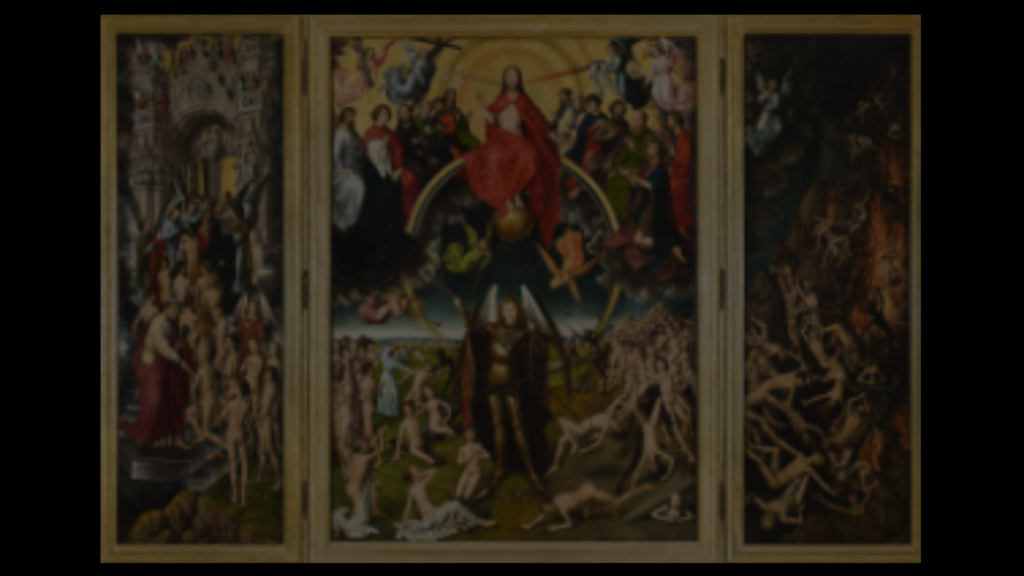
FIFTH SUNDAY AFTER THE EPIPHANY: ON THE PAINS OF HELL
Written by AJ Baalman on February 1, 2026
” Gather up first the cockle, and bind into bundles to burn.” MATT. xiii. 30.
+
I shall first speak of the fire, which is the principal pain that torments the senses of the
damned, and afterwards of the other pains of hell.
+
1. BEHOLD! the final doom of sinners who abuse the divine mercy is, to burn in the fire of
hell. God threatens hell, not to send us there, but to deliver us from that place of torments.
”Minatur Deus gehennem, ”says St. Chrysostom, ”ut a gehenna liberet, et ut firmi ac stabiles
evitemus minas.” (Hom. v. de Pœnit.) Remember, then, brethren, that God gives you Today
the opportunity of hearing this sermon, that you may be preserved from hell, and that you
may give up sin, which alone can lead you to hell.
+
2. My brethren, it is certain and of faith that there is a hell. After judgment the just shall enjoy
the eternal glory of Paradise, and sinners shall be condemned to suffer the everlasting
chastisement reserved for them in hell. “And these shall go into everlasting punishment, but
the just into life everlasting.” (Matt. xxv. 46.) Let us examine in what hell consists. It is what
the rich glutton called it a place of torments. “In hunc locum tormentorum.” (Luc. xvi. 28.) It
is a place of suffering, where each of the senses and powers of the damned has its proper
torment, and in which the torments of each person will be increased in proportion to the
forbidden pleasures in which he indulged. “As much as she hath glorified herself and lived in
delicacies, so much torment and sorrow give ye to her.” (Apoc. xviii. 7.)
+
3. In offending God the sinner does two evils: he abandons God, the sovereign good, who is
able to make him happy, and turns to creatures, who are incapable of giving any real
happiness to the soul. Of this injury which men commit against him, the Lord complains by
his prophet Jeremiah: “For my people have done two evils. They have forsaken me, the
fountain of living waters, and have digged to themselves cisterns broken cisterns that can
hold no water.” (Jer. ii. 13.) Since, then, the sinner turns his back on God, he shall be
tormented in hell, by the pain arising from the loss of God, of which I shall speak on another
occasion [see the Sermon for the nineteenth Sunday after Pentecost], and since, in offending
God, he turns to creatures, he shall be justly tormented by the same creatures, and principally
by fire.
+
4. ”The vengeance on the flesh of the ungodly is fire and worms.” (Eccl vii. 19.) Fire and the
remorse of conscience are the principal means by which God takes vengeance on the flesh of
the wicked. Hence, in condemning the reprobate to hell, Jesus Christ commands them to go
into eternal fire. : ”Depart from me, you cursed, into everlasting fire.” (Matt. xxv. 41.) This
fire, then, shall be one of the most cruel executioners of the damned.
+
5. Even in this life the pain of fire is the most terrible of all torments. But St. Augustine says,
that in comparison of the fire of hell, the fire of this earth is no more than a picture compared
with the reality, “In cuius comparatione noster hie ignus depictus est. ” Anselm teaches, that
the fire of hell as far surpasses the fire of this world, as the fire of the real exceeds that of
painted fire. The pain, then, produced by the fire of hell is far greater than that which is
produced by our fire because God has made the fire of this earth for the use of man, but he
has created the fire of hell purposely for the chastisement of sinners; and therefore, as
Tertullian says, he has made it a minister of his justice. ”Longe alius est ignis, qui usui
humano, alms qui Dei justitiæ deservit.” This avenging fire is always kept alive by the wrath
of God. ”A fire is kindled in my rage. ” (Jer. xv 14)
+
6 “And the rich man also died, and he was buried in hell.” (Luke xvi. 22.) The damned are
buried in the fire of hell; hence they have an abyss of fire below, an abyss of fire above, and
an abyss of fire on every side. As a fish in the sea is surrounded by water, so the unhappy
reprobate are encompassed by fire on every side. The sharpness of the pain of fire may be
inferred from the circumstance, that the rich glutton complained of no other torment. ”I am
tormented in this flame.” (Ibid, v 23.)
+
7 The Prophet Isaias says that the Lord will punish the guilt of sinners with the spirit of fire.
“If the Lord shall wash away the filth of the daughters of Sion by the spirit of burning” (iv.
4). ”The spirit of burning” is the pure essence of fire. All spirits or essences, though taken
from simple herbs or flowers, are so penetrating, that they reach the very bones. Such is the
fire of hell. Its activity is so great, that a single spark of it would be sufficient to melt a
mountain of bronze. The disciple relates, that a damned person, who appeared to a religious,
dipped his hand into a vessel of water; the religious placed in the vessel a candlestick of
bronze, which was instantly dissolved.
+
8. This fire shall torment the damned not only externally, but also internally. It will burn the
bowels, the heart, the brains, the blood within the veins, and the marrow within the bones.
The skin of the damned shall be like a caldron, in which their bowels, their flesh, and their
bones shall be burned. David says, that the bodies of the damned shall be like so many
furnaces of fire. ”Thou shalt make them as an oven of fire in the time of thy anger.” (Ps. xx.
10.)
+
9. O God! certain sinners cannot bear to walk under a strong sun, or to remain before a large
fire in a close room; they cannot endure a spark from a candle; and they fear not the fire of
hell, which, according to the Prophet Isaias, not only burns, but devours the unhappy
damned. ”Which of you can dwell with devouring fire. ”(Isaias xxxiii. 14.) As a lion devours a
lamb, so the fire of hell devours the reprobate; but it devours without destroying life, and
thus tortures them with a continual death. Continue, says St. Peter Damian to the sinner who
indulges in impurity, continue to satisfy your flesh; a day will come, or rather an eternal
night, when your impurities, like pitch, shall nourish a fire within your very bowels. “Venit
dies, imo nox, quando libido tua vertetur in picem qua se nutriet perpetuus ignis in visceribus
tuis.” (Epist. 6.) And according to St. Cyprian, the impurities of the wicked shall boil in the
very fat which will issue from their accursed bodies.
+
10, St. Jerome teaches, that in this fire sinners shall suffer not only the pain of the fire, but
also all the pains which men endure on this earth. “In uno igne omnia supplicia sentient in
inferno peccatores.” (Ep. ad Pam.) How manifold are the pains to which men are subject in
this life. Pains in the sides, pains in the head, pains in the loins, pains in the bowels. All these
together torture the damned.
+
11. The fire itself will bring with it the pain of darkness; for, by its smoke it will, according to
St. John, produce a storm of darkness which shall blind the damned.
”To whom the storm of darkness is reserved for ever.” (St. Jude 13.)
Hence, hell is called a land of darkness covered with the shadow of death. ”
A land that is dark and covered with the mist of death a land of
misery and darkness, where the shadow of death, and no order but everlasting horror
dwelleth.” (Job x. 21, 22.) To hear that a criminal is shut up in a dungeon for ten or twenty
years excites our compassion. Hell is a dungeon closed on every side, into which a ray of the
sun or the light of a candle never enters. Thus the damned”shall never see light.” (Ps xlviii.
20.) The fire of this world gives light, but the fire of hell is utter darkness. In explaining the
words of David, ”the voice of the Lord divideth the flame of fire,” (Ps. xxviii. 7,) St. Basil says,
that in hell the Lord separates the fire that burns from the flame which illuminates, and
therefore this fire burns, but gives no light. B. Albertus Magnus explains this passage more
concisely by saying that God”divides the heat from the light.” St. Thomas teaches, that in hell
there is only so much light as is necessary to torment the damned by the sight of their
associates and of the devils: “Quantum sufficit ad videndum ilia quæ torquere possunt.” (3
p., q. 97, art. 5.) And according to St. Augustine, the bare sight of these infernal monsters
excites sufficient terror to cause the death of all the damned, if they were capable of dying.
“Videbunt monstra, quorum visio postet illos occidere.”
+
12. To suffer a parching thirst, without having a drop of water to quench it, is intolerably
painful. It has sometimes happened, that travellers who could procure no refreshment after a
long journey, have fainted from the pain produced by thirst. So great is the thirst of the
damned, that if one of them were offered all the water on this earth, he would exclaim: All
this water is not sufficient to extinguish the burning thirst which I endure. But, alas! the
unhappy damned shall never have a single drop of water to refresh their tongues. “He cried
out and said: Father Abraham, have mercy on me, and send Lazarus, that he may dip the tip
of his finger in water, to cool my tongue, for I am tormented in this flame. ” (St. Luke xvi. 24.)
The rich glutton has not obtained, and shall never obtain, this drop of water, as long as God
shall be God.
+
13. The reprobate shall be likewise tormented by the stench which pervades hell. The stench
shall arise from the very bodies of the damned. “Out of their carcasses shall arise a stink.”
(Isaiah xxxiv. 3.) The bodies of the damned are called carcasses, not because they are dead
(for they are living, and shall be forever alive to pain), but on account of the stench which
they exhale. Would it not be very painful to be shut up in a close room with a fetid corpse? St.
Bonaventure says, that if the body of one of the damned were placed in the earth, it would,
by its stench, be sufficient to cause the death of all men. How intolerable, then, must it be to
live for ever in the dungeons of hell in the midst of the immense multitudes of the damned!
Some foolish worldlings say: If I go to hell, I shall not be there alone. Miserable fools! do you
not see that the greater the number of your companions, the more insufferable shall be your
torments? “There,” says St. Thomas, ”the society of the reprobate shall cause an increase and
not a diminution of misery.” (Suppl., q. 86, art. 1.) The society of the reprobate augments
their misery, because each of the damned is a source of suffering to all the others. Hence, the
greater their number, the more they shall mutually torment each other. ”And the people,”
says the prophet Isaias, “shall be ashes after a fire, as a bundle of thorns they shall be burnt
with fire.” (Isa. xxxiii. 12.) Placed in the midst of the furnace of hell, the damned are like so
many grains reduced to ashes by that abyss of fire, and like so many thorns tied together and
wounding each other.
+
14. They are tormented not only by the stench of their companions, but also by their shrieks
and lamentations. How painful it is to a person longing for sleep to hear the groans of a sick
man, the barking of a dog, or the screams of an infant. The damned must listen incessantly to
the wailing and howling of their associates, not for a night, nor for a thousand nights, but for
all eternity, without the interruption of a single moment.
+
15. The damned are also tormented by the narrowness of the place in which they are
confined; for, although the dungeon of hell is large, it will be too small for so many millions
of the reprobate, who like sheep shall be heaped one over the other. “They are,” says David,
“laid in hell like sheep.” (Ps. xlviii. 15.) We learn from the Scriptures that they shall be
pressed together like grapes in the winepress, by the vengeance of an angry God. ”The
winepress of the fierceness of the wrath of God the Almighty.” (Apoc. xix. 15.) From this
pressure shall arise the pain of immobility. “Let them become unmoveable as a stone.” (Exod.
xvi. 16.) In whatever position the damned shall fall into hell after the general judgment,
whether on the side, or on the back, or with the head downwards, in that they must remain
for eternity, without being ever able to move foot or hand or finger, as long as God shall be
God. In a word, St. Chrysostom says, that all the pains of this life, however great they may
be, are scarcely a shadow of the torments of the damned. ”Hæc omnia ludicra sunt et risus ad
ilia supplicia: pone ignem, ferrum, et bestias, attamen vix umbra sunt ad ilia tormenta.”
(Hom, xxxix. ad pop. Ant.)
+
16. The reprobate, then, shall be tormented in all the senses of the body. They shall also be
tormented in all the powers of the soul. Their memory shall be tormented by the
remembrance of the years which they had received from God for the salvation of their souls,
and which they spent in labouring for their own damnation; by the remembrance of so many
graces and so many divine lights which they abused. Their understanding shall be tormented
by the knowledge of the great happiness which they forfeited in losing their souls, heaven,
and God; and by a conviction that this loss is irreparable. Their will shall be tormented by
seeing that whatsoever they ask or desire shall be refused. “The desire of the wicked shall
perish.” (Ps. cxi. 10.) They shall never have any of those things for which they wish, and must
for ever suffer all that is repugnant to their will. They would wish to escape from these
torments and to find peace; but in these torments they must for ever remain, and peace they
shall never enjoy.
+
17. Perhaps they may sometimes receive a little comfort, or at least enjoy occasional repose?
No, says Cyprian: ”Nullum ibi refrigerium, nullum remedium, atque ita omni tormento
atrocius desperatio.” (Serm. de Ascens.) In this life, how great soever may be the tribulations
which we suffer, there is always some relief or interruption. The damned must remain for
ever in a pit of fire, always in torture, always weeping, without ever enjoying a moments
repose. But perhaps there is some one to pity their sufferings? At the very time that they are
so much afflicted the devils continually reproach them with the sins for which they are
tormented, saying: Suffer, burn, live for ever in despair: you yourselves have been the cause
of your destruction. And do not the saints, the divine mother, and God, who is called the
Father of Mercies, take compassion on their miseries? No;”the sun shall be darkened, and the
moon shall not give her light, and the stars shall fall from heaven.” (Matt. xxvi. 29.)
The saints, represented by the stars, not only do not pity the damned, but they even rejoice in the
vengeance inflicted on the injuries offered to their God.
Neither can the divine mother pity them, because they hate her Son.
And Jesus Christ, who died for the love of them, cannot pity them, because they have despised his love, and have voluntarily brought themselves to perdition.
+
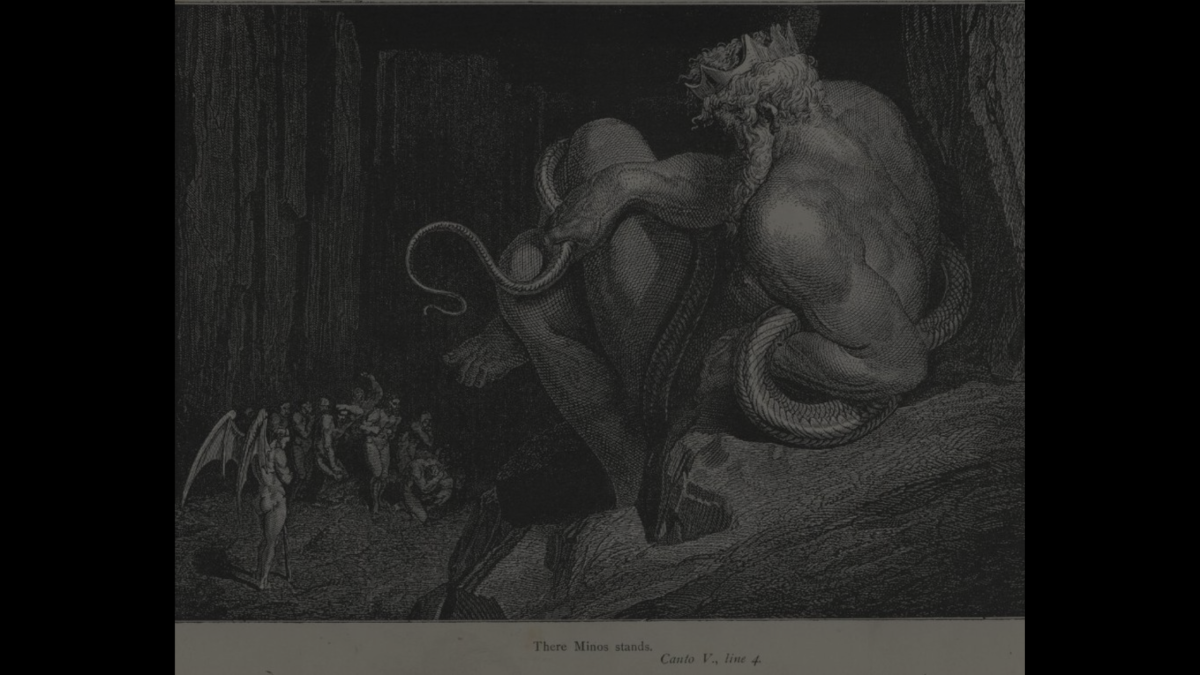
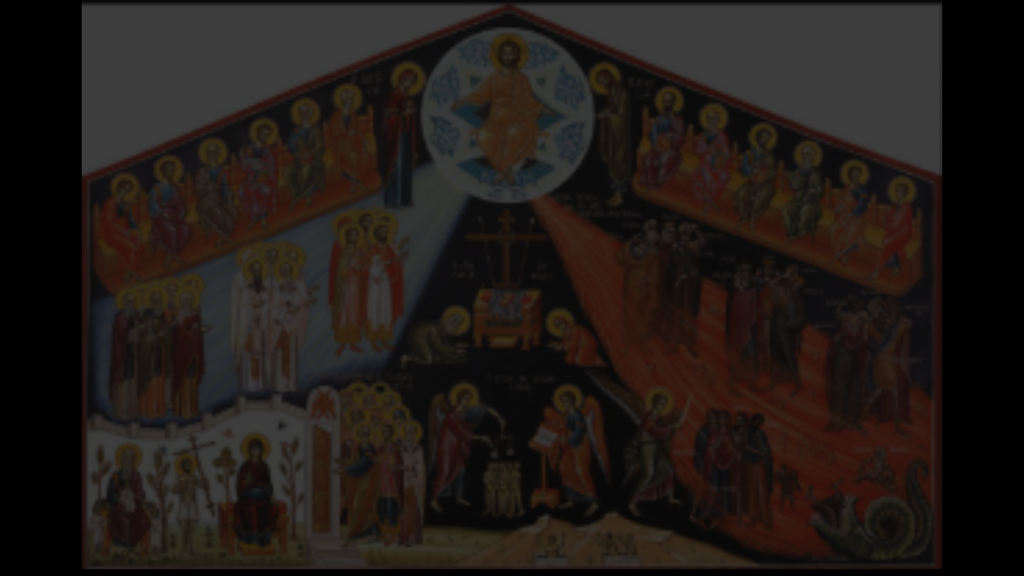
Image Comes From Dante’s Inferno Cano V
Views: 24
Reader's opinions
Continue reading