The Third Sunday Of Lent: Sermon ON CONCEALING SINS IN CONFESSION.
Written by AJ Baalman on March 8, 2026
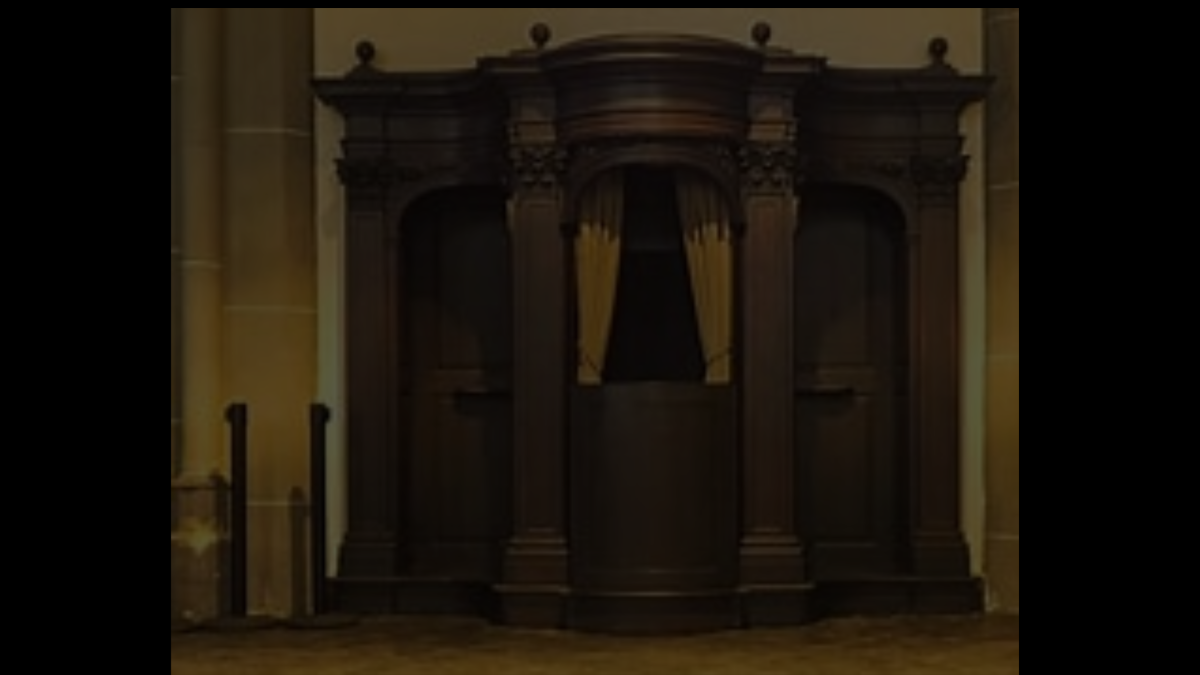
Once Again, The Sermon Comes From This Book, Click The Image To Get A Copy

Read The Sermon Of The First Sunday Of Lent Sermon
Read The Sermon Of The Second Sunday Of Lent Sermon
” And he was casting out a devil, and the same was dumb.” LUKE xi. 14.
THE devil does not bring sinners to hell with their eyes open: he first blinds them with the
malice of their own sins. ”For their own malice blinded them.” (Wis. ii. 21.) He thus leads
them to eternal perdition. Before we fall into sin, the enemy labours to blind us, that we may
not see the evil we do and the ruin we bring upon ourselves by offending God. After we
commit sin, he seeks to make us dumb, that, through shame, we may conceal our guilt in
confession. Thus, he leads us to hell by a double chain, inducing us, after our transgressions,
to consent to a still greater sin the sin of sacrilege. I will speak on this subject today, and will
endeavour to convince you of the great evil of concealing sins in confession
+
1. In expounding the words of David”Set a door O Lord, round about my lips,” (Ps. cxl. 3) St.
Augustine says: “Non dixit claustrum, sed ostium: ostium et aperitur et clauditur: aperiatur
ad confessionem peccati: claudatur ad excusationem peccati.” “We should keep a door to the
mouth, that it may be closed against detraction, and blasphemies, and all improper words,
and that it may be opened to confess the sins we have committed. ”Thus,” adds the holy
doctor, ”it will be a door of restraint, and not of destruction.” To be silent when we are
impelled to utter words injurious to God or to our neighbour, is an act of virtue; but, to be
silent in confessing our sins, is the ruin of the soul. After we have offended God, the devil
labours to keep the mouth closed, and to prevent us from confessing our guilt. St. Antonine
relates, that a holy solitary once saw the devil standing beside a certain person who wished
to go to confession. The solitary asked the fiend what he was doing there. The enemy said in
reply: ”I now restore to these penitents what I before took away from them; I took away
from them shame while they were committing sin; I now restore it that they may have a
horror of confession.”“My sores are putrefied and corrupted, because of my foolishness.” (Ps.
xxxvii. 6.) Gangrenous sores are fatal; and sins concealed in confession are spiritual ulcers,
which mortify and become gangrenous.
+
2. “Pudorem,” says St. Chrysostom, ”dedit Deus peccato, confessioni nduciam: invertit rem
diabolis, peccato fiduciam præbet, confessioni pudorem.” (Proem, in Isa.) God has made sin
shameful, that we may abstain from it, and gives us confidence to confess it by promising
pardon to all who accuse themselves of their sins. But the devil does the contrary: he gives
confidence to sin by holding out hopes of pardon; but, when sin is committed, he inspires
shame, to prevent the confession of it.
+
3. A disciple of Socrates, at the moment he was leaving a house of bad fame, saw his master
pass: to avoid being seen by him, he went back into the house. Socrates came to the door and
said: My son, it is a shameful thing to enter, but not to depart from this house. ”Non te
pudeat, fili egredi ex hoc loco, intrasse pudeat.” To you also, brethren, who have sinned, I
say, that you ought to be ashamed to offend so great and so good a God. But you have no
reason to be ashamed of confessing the sins which you have committed. Was it shameful in
St. Mary Magdalene to acknowledge publicly at the feet of Jesus Christ that she was a sinner?
By her confession she became a saint. Was it shameful in St. Augustine not only to confess his
sins, but also to publish them in a book, that, for his confusion, they might be known to the
whole world? Was it shameful in St. Mary of Egypt to confess, that for so many years she had
led a scandalous life? By their confessions these have become saints, and are honoured on the
altars of the Church.
+
4. We say that the man who acknowledges his guilt before a secular tribunal is condemned ,
but in the tribunal of Jesus Christ, they who confess their sins obtain pardon, and receive a
crown of eternal glory. “After confession,” says St. Chrysostom, ”a crown is given to
penitents.” He who is afflicted with an ulcer must, if he wish to be cured, show it to a
physician: otherwise it will fester and bring on death. ”Quod ignorat,” says the Council of
Trent, ”medicina non curat.” If, then, brethren, your souls be ulcerated with sin, be not
ashamed to confess it; otherwise you are lost. ”For thy soul be not ashamed to say the truth.”
(Eccl. iv. 24.) But, you say, I feel greatly ashamed to confess such a sin. If you wish to be
saved, you must conquer this shame. ”For there is a shame that bringeth sin, and there is a
shame that bringeth glory and grace.” (Ib. iv. 25.) There are, according to the inspired writer,
two kinds of shame: one of which leads souls to sin, and that is the shame which makes them
conceal their sins at confession; the other is the confusion which a Christian feels in
confessing his sins; and this confusion obtains for him the grace of God in this life, and the
glory of heaven in the next.
+
5. St. Augustine says, that to prevent the sheep from seeking assistance by her cries the wolf
seizes her by the neck, and thus securely carries her away and devours her. The devil acts in
a similar manner with the sheep of Jesus Christ. After having induced them to yield to sin, he
seizes them by the throat, that they may not confess their guilt; and thus he securely brings
them to hell. For those who have sinned grievously, there is no means of salvation but the
confession of their sins. But, what hope of salvation can he have who goes to confession and
conceals his sins, and makes use of the tribunal of penance to offend God, and to make
himself doubly the slave of Satan? What hope would you entertain of the recovery of the man
who, instead of taking the medicine prescribed by his physician, drank a cup of poison? God!
What can the sacrament of penance be to those who conceal their sins, but a deadly poison,
which adds to their guilt the malice of sacrilege? In giving absolution, the confessor dispenses
to his patient the blood of Jesus Christ; for it is through the merits of that blood that he
absolves from sin. What, then, does the sinner do, when he conceals his sins in confession?
He tramples under foot the blood of Jesus Christ. And should he afterwards receive the holy
communion in a state of sin, he is, according to St. Chrysostom, as guilty as if he threw the
consecrated host into a sink. ”Non minus detestabile est in os pollutum, quam in
sterquilinum mittere Dei Filium.” (Hom. Ixxxiii., in Matt.) Accursed shame! how many poor
souls do you bring to hell?”Magis memores pudoris,” says Tertullian, ”quam salutis.”
Unhappy souls! they think only of the shame of confessing their sins, and do not reflect that,
if they conceal them, they shall be certainly damned.
+
6. Some penitents ask: ”What will my confessor say when he hears that I have committed
such a sin ?” What will he say? He will say that you are, like all persons living on this earth,
miserable and prone to sin: he will say that, if you have done evil, you have also performed a
glorious action in overcoming shame, and in candidly confessing your fault.
+
7. ”But I am afraid to confess this sin.” To how many confessors, I ask, must you tell it? It is
enough to mention it to one priest, who hears many sins of the same kind from others. It is
enough to confess it once: the confessor will give you penance and absolution, and your
conscience shall be tranquillized. But, you say: ”I feel a great repugnance to tell this sin to my
spiritual father.” Tell it, then, to another confessor, and, if you wish, to one to whom you are
unknown. ”But, if this come to the knowledge of my confessor, he will be displeased with
me.” What then do you mean to do? Perhaps, to avoid giving displeasure to him, you intend
to commit a heinous crime, and remain under sentence of damnation. This would be the very
height of folly.
+
8. Are you afraid that the confessor will make known your sin to others? Would it not be
madness to suspect that he is so wicked as to break the seal of confession by revealing your
sin to others? Remember that the obligation of the seal of confession is so strict, that a
confessor cannot speak out of confession, even to the penitent, of the smallest venial fault;
and if he did so, * he would be guilty of a most grievous sin.
+
9. But you say: “I am afraid that my confessor, when he hears my sin, will rebuke me with
great severity.” God! Do you not see that all these are deceitful artifices of the devil to bring
you to hell? No; the confessor will not rebuke you, but he will give an advice suited to your
state. A confessor cannot experience greater consolation than in absolving a penitent who
confesses his sins with true sorrow and with sincerity. If a queen were mortally wounded by
a slave, and you were in possession of a remedy by which she could be cured, how great
would be your joy in saving her life! Such is the joy which a confessor feels in absolving a
soul in the state of sin. By his act he delivers her from eternal death: and by restoring to her
the grace of God, he makes her a queen of Paradise.
* That is, without the permission of the penitent.
+
10. But you have so many fears, and are not afraid of damning your own soul by the
enormous crime of concealing sins in confession. You are afraid of the rebuke of your
confessor, and fear not the reproof which you shall receive from Jesus Christ, your Judge, at
the hour of death. You are afraid that your sins shall become known (which is impossible),
and you dread not the day of judgment, on which, if you conceal them, they shall be revealed
to all men. If you knew that, by concealing sins in confession, they shall be made known to all
your relatives and to all your neighbours, you would certainly confess them. But, do you not
know, says St. Bernard, that if you refuse to confess your sins to one man, who, like yourself,
is a sinner, they shall be made known not only to all your relatives and neighbours, but to
the entire human race?”Si pudor est tibi uni homini, et peccatori peccatum exponere, quid
facturus es in die judicii, ubi omnibus exposita tua conscientia patebit ?” (S. Ber. super illud
Joan., cap. xi.)”Lazare veni foras.” If you do not confess your sin, God himself shall, for your
confusion, publish not only the sin which you conceal, but also all your iniquities, in the
presence of the angels and of the whole world. ”I will discover thy shame to thy face, and
will show thy wickedness to the nations.” (Nah. iii. 5.)
+
11. Listen, then, to the advice of St. Ambrose. The devil keeps an account of your sins, to
charge you with them at the tribunal of Jesus Christ. Do you wish, says the saint, to prevent
this accusation? Anticipate your accuser: accuse yourself now to a confessor, and then no
accuser shall appear against you at the judgment-seat of God. ”Præveni accusatorem tuum;
si to accusaveris, accusatorem nullum timebis.” (Lib. 2 de Pœnit., cap. ii.) But, according to
St. Augustine, if you excuse yourself in confession, you shut up sin within your soul, and
shut out pardon. “Excusas te, includis peccatum, excludis indulgentiam.” (Hom. xii. 50.)
+
12. If, then, brethren, there be a single soul among you who has ever concealed a sin, through
shame, in the tribunal of penance, let him take courage, and make a full confession of all his
faults. ”Give glory to God with a good heart.” (Eccl. xxxv. 10.) Give glory to God, and
confusion to the devil. A certain penitent was tempted by Satan to conceal a sin through
shame; but she was resolved to confess it; and while she was going to her confessor, the devil
came forward and asked her where she was going. She courageously answered: “I am going
to cover myself and you with confusion.” Act you in a similar manner; if you have ever
concealed a mortal sin, confess it candidly to your director, and confound the devil.
Remember that the greater the violence you do yourself in confessing your sins, the greater
will be the love with which Jesus Christ will embrace you.
+
13. Courage, then! expel this viper which you harbour in your soul, and which continually
corrodes your heart and destroys your peace. Oh! what a hell does a Christian suffer who
keeps in his heart a sin concealed through shame in confession! He suffers an anticipation of
hell. It is enough to say to the confessor: ”Father, I have a certain scruple regarding my past
life, but I am ashamed to tell it.” This will be enough: the confessor will help to pluck out the
serpent which gnaws your conscience. And, that you may not entertain groundless scruples,
I think it right to tell you, that if the sin which you are ashamed to tell be not mortal, or if you
never considered it to be a mortal sin, you are not obliged to confess it; for we are bound only
to confess mortal sins. Moreover, if you have doubts whether you ever confessed a certain sin
of your former life, but know that, in preparing for confession, you always carefully
examined your conscience, and that you never concealed a sin through shame; in this case,
even though the sin about the confession of which you are doubtful, had been a grievous
fault, you are not obliged to confess it because it is presumed to be morally certain that you
have already confessed it. But, if you know that the sin was grievous, and that you never
accused yourself of it in confession, then there is no remedy; you must confess it, or you must
be damned for it. But, lost sheep, go instantly to confession. Jesus Christ is waiting for you;
he stands with arms open to pardon and embrace you, if you acknowledge your guilt. I
assure you that, after having confessed all your sins, you shall feel such consolation at having
unburdened your conscience and acquired the grace of God, that you shall for ever bless the
day on which you made this confession. Go as soon as possible in search of a confessor. Do
not give the devil time to continue to tempt you. and to make you put off your confession: go
immediately: for Jesus Christ is waiting for you.
+
Views: 13